
It seems like every motorcyclist, while keeping eyes peeled on the road ahead, can’t shake off what is following in the rear views. It’s the stories, the rides, the emotions and the heroes that join us in this moment in the present, with a future unknown. And it seems colours play a significant part in nostalgia…
De Gustibus et Coloribus - The colours of nostalgia
Motorcycle Diaries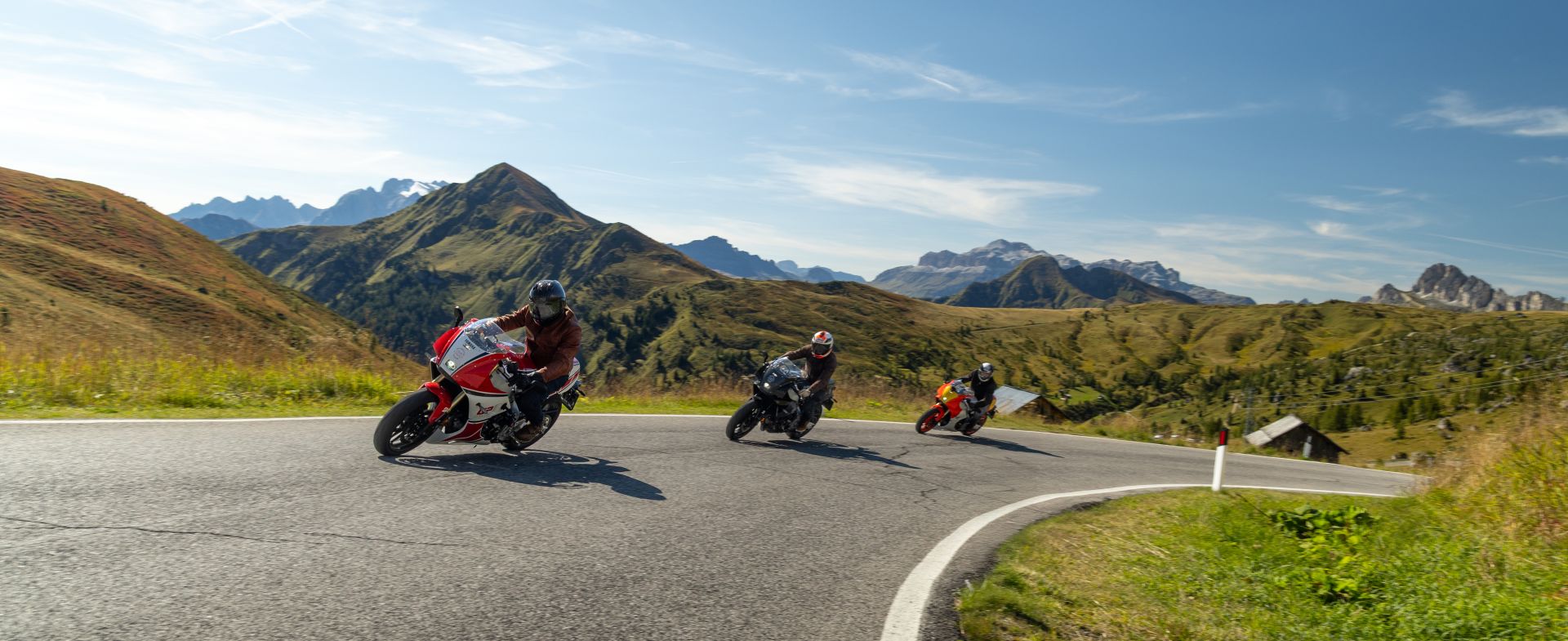
What is it with motorcycling and nostalgia?
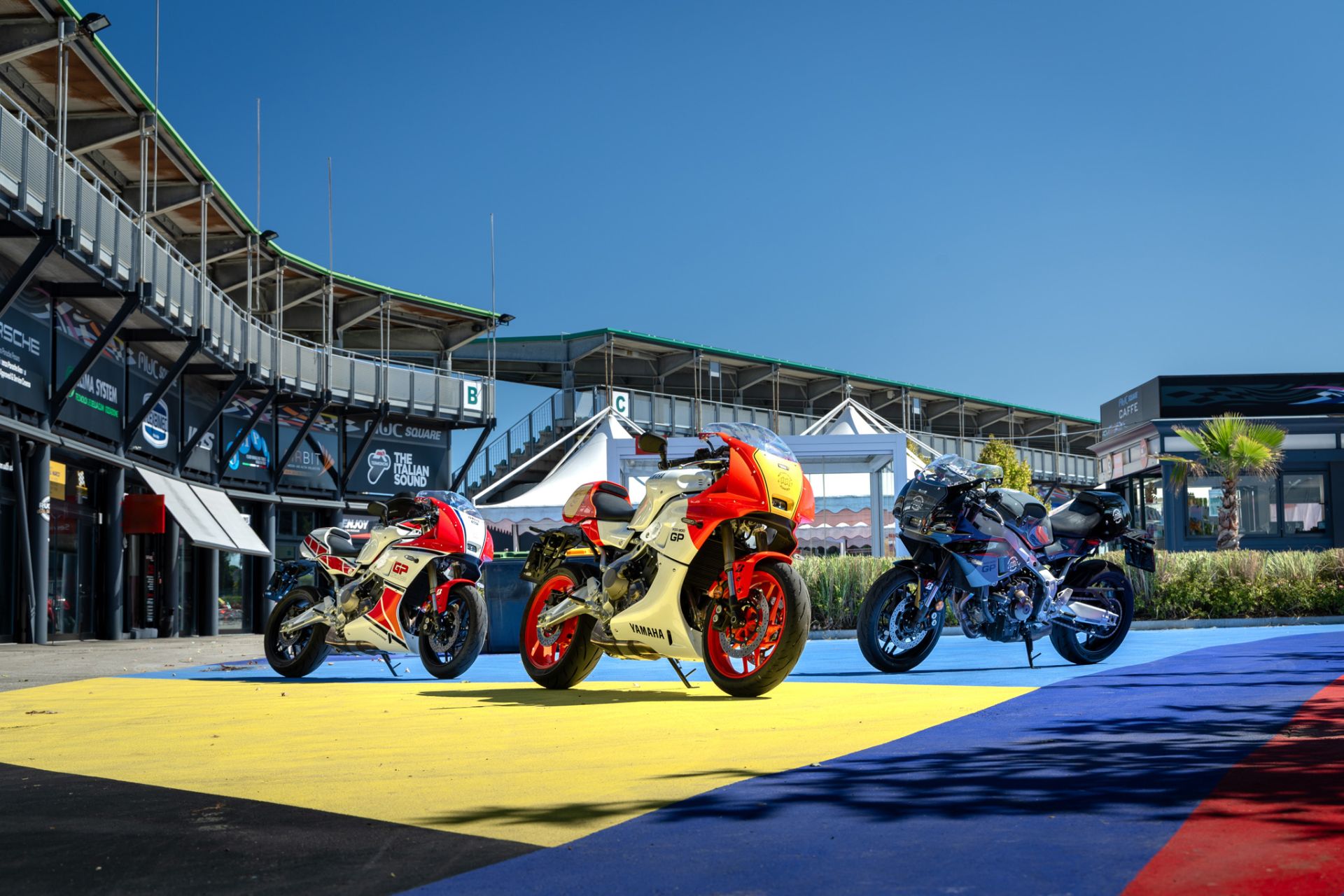
Nostalgia is what brought James to Misano. As the engineer and creator of the Yamaha XSR900GP, the Misano World Circuit Marco Simoncelli is a bittersweet place to visit. James is overlooking the corner where American Wayne Rainey had a career ending crash during the 1993 season. It not only ended his career, but also the glory days of the Marlboro Yamaha team, exactly 10 years after the iconic and destinctive red and white colours were first introduced in the world of two wheeled GP-racing, scoring two triple crowns with Lawson and Rainey.
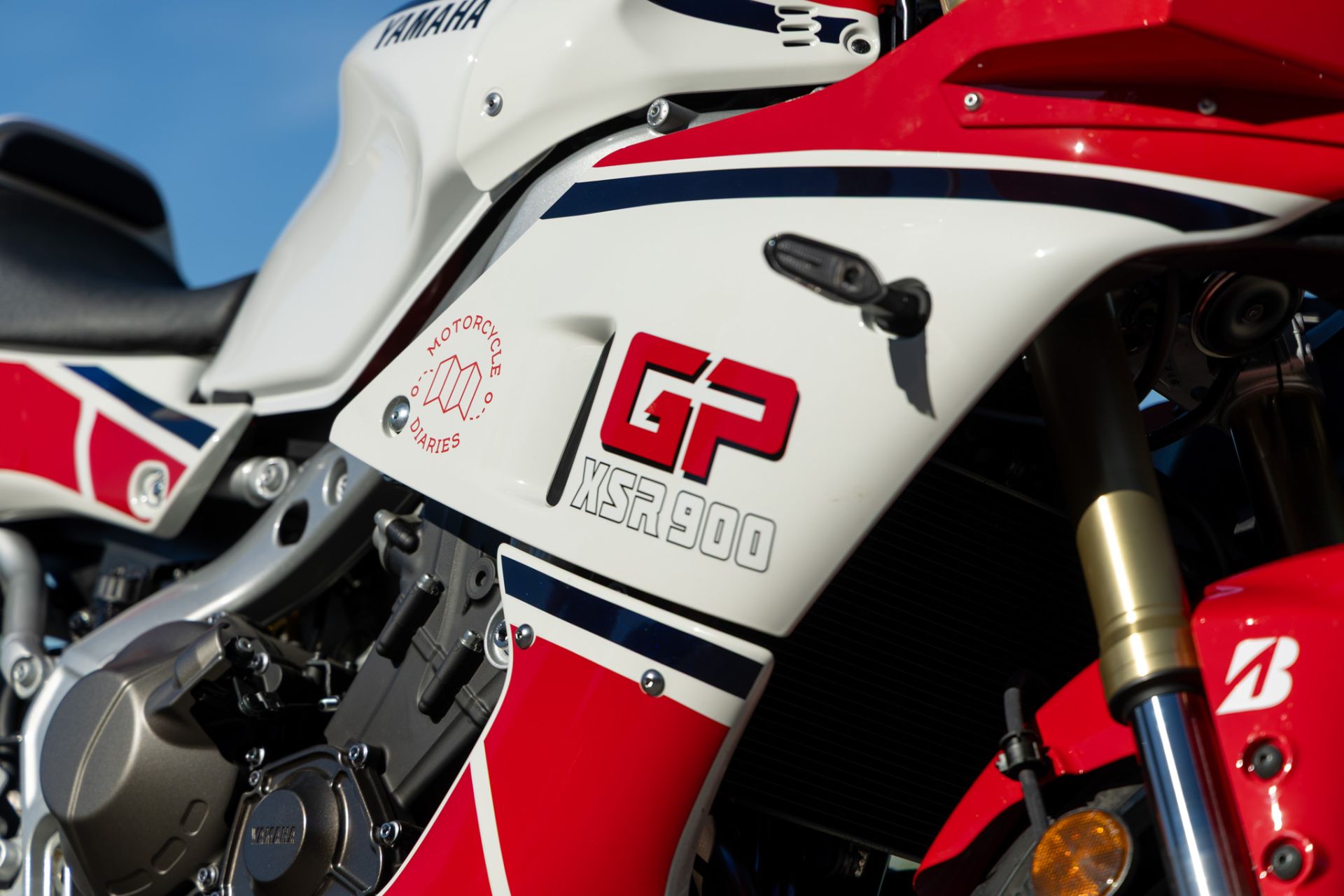

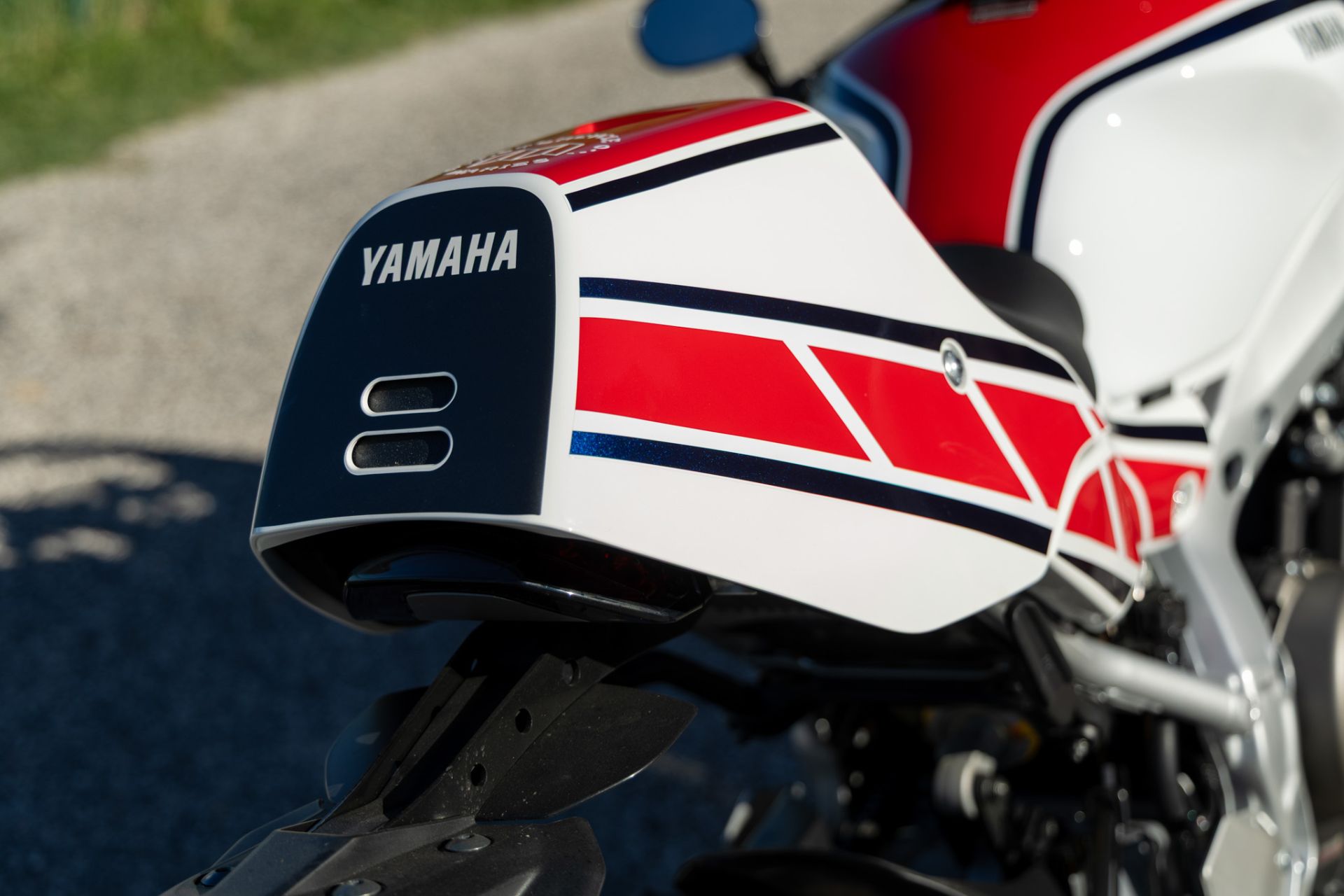
After Rainey’s crash at Misano, there were still sporadic race victories, but far and few between and no more titles for the iconic partnership. It’s a time James and many others think off in romantic memories of screaming banshee two strokes, hard racers fighting these machines like bucking broncos in races where every corner brought drama. And the reason James is here is because he is looking for inspiration for the next iteration of the XSR 900 GP and what iconic colours it should have.
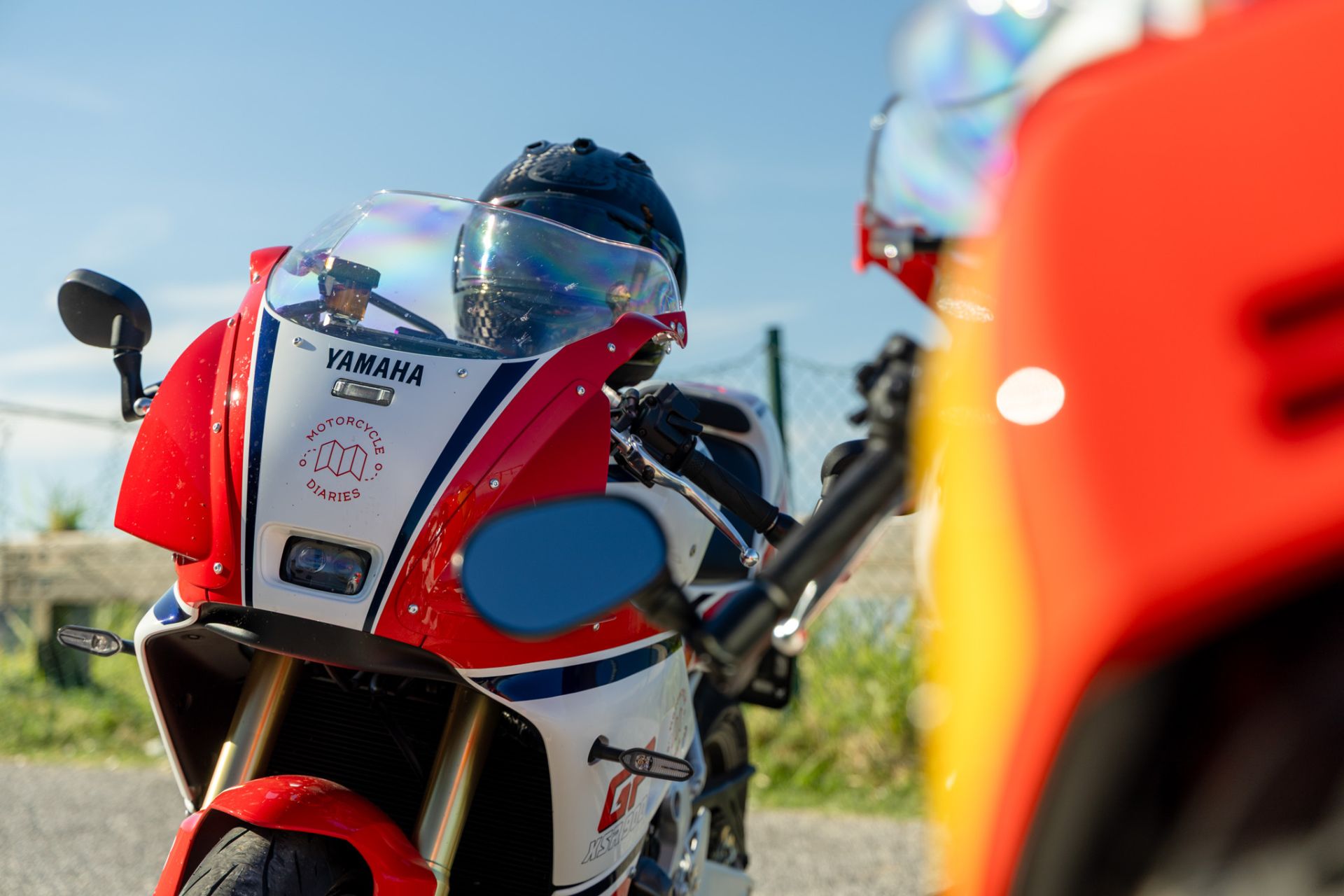
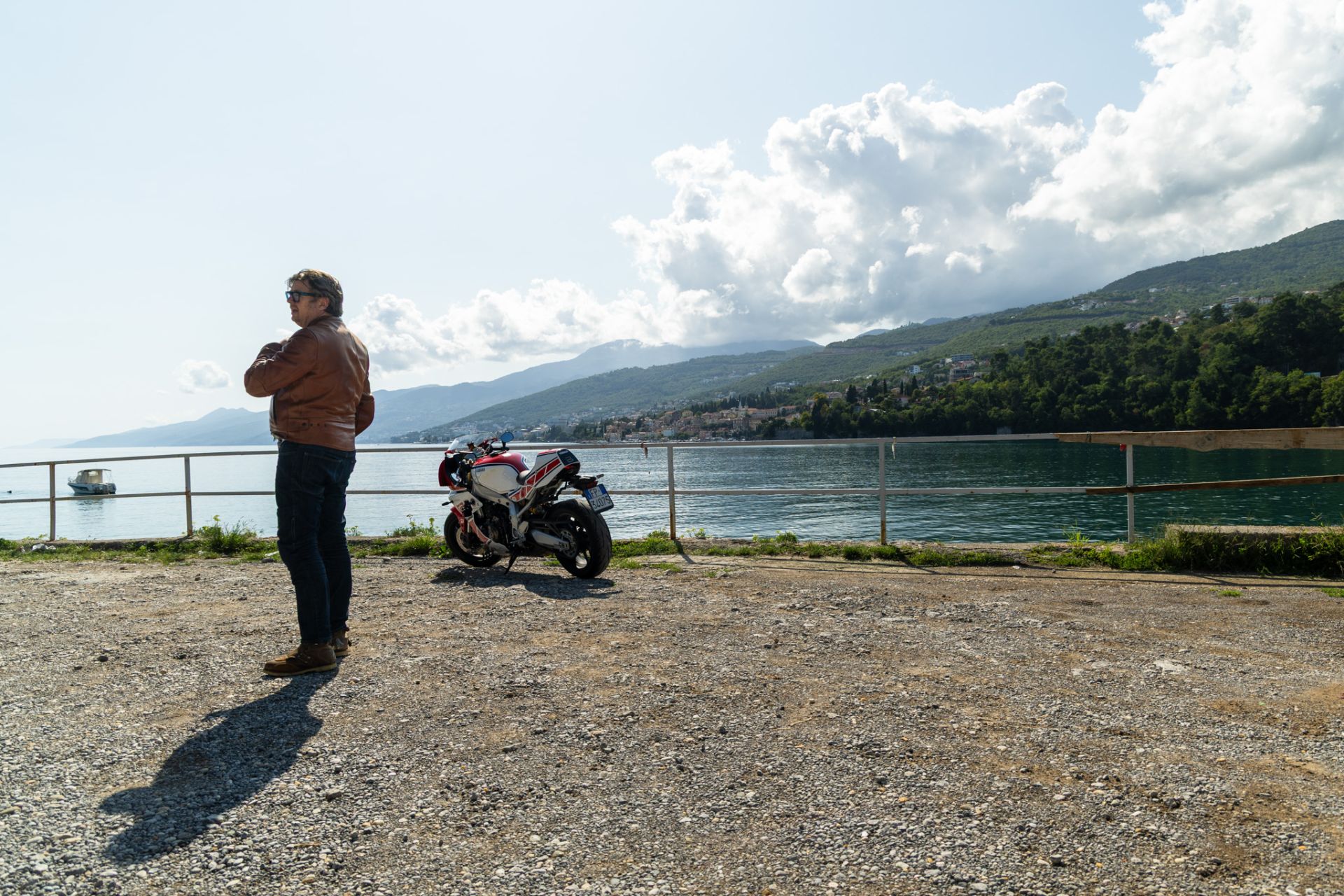
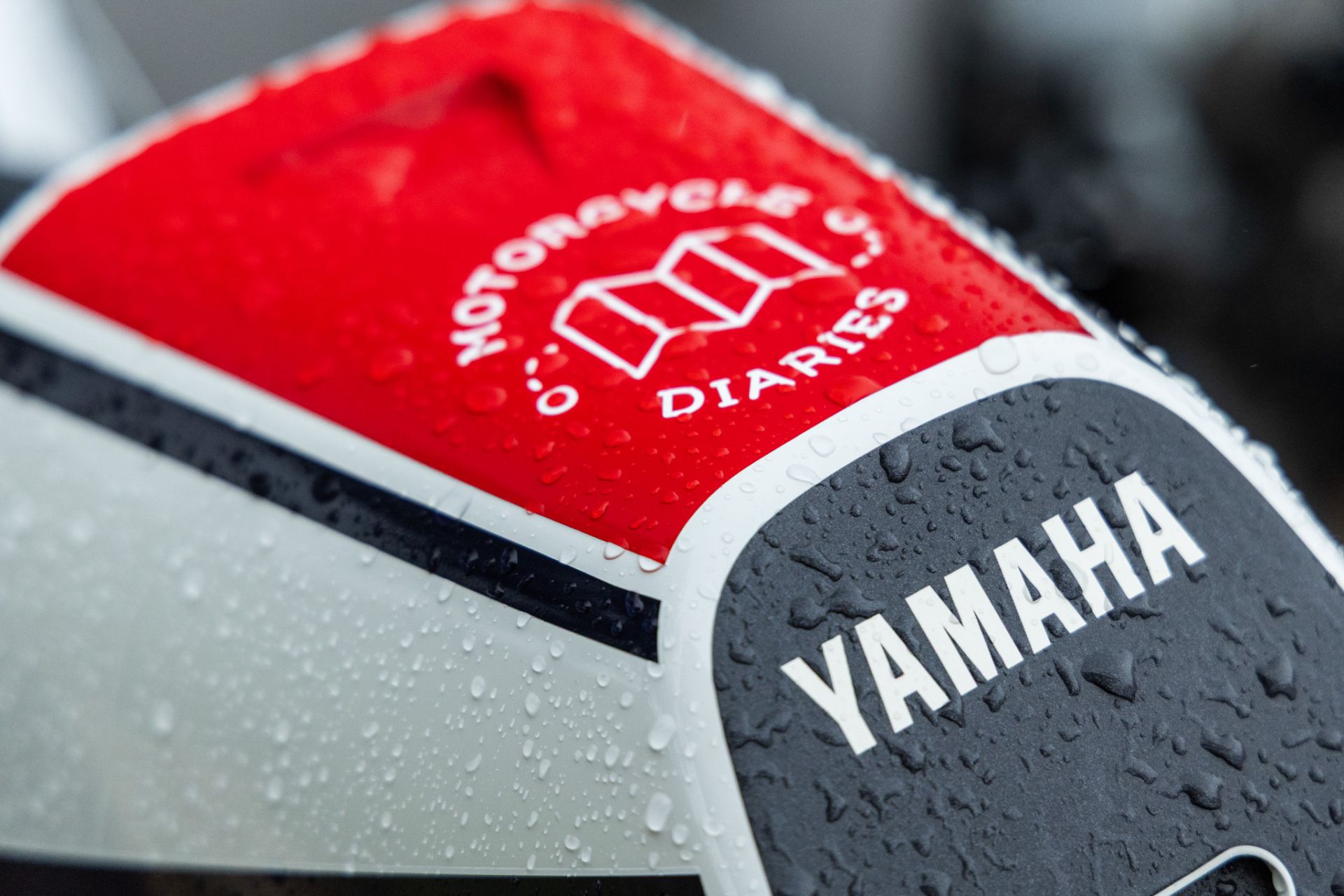
Peter-Jan - or PJ in short - also has romantic bittersweet memories about shreeking two-strokes, but less so in racing colours. He’s always been about riding roads, less about going round in fast circles. That’s why his XSR900GP has custom colours emulating the RD500LC. Launched in 1984, the RD was a direct descendant of the V4 YZR500 GP bikes that Roberts and Lawson used to race.
A friend of PJ’s had an RD500LC and it was that very bike that got PJ hooked on motorcycles, and making them his life. That this friend got killed on the RD makes this XSR900GP not only a tribute to an iconic motorcycle, but also a friend long lost. PJ is overlooking the sparkling blue Adriatic sea from the famous ‘Panoramica’ road near Misano when he meets up with James, bonding in mutual nostalgia expressed by their XSR GP’s. It’s here their trip down memory lane starts. A trip that will end on the exact opposite side of the Adriatic.
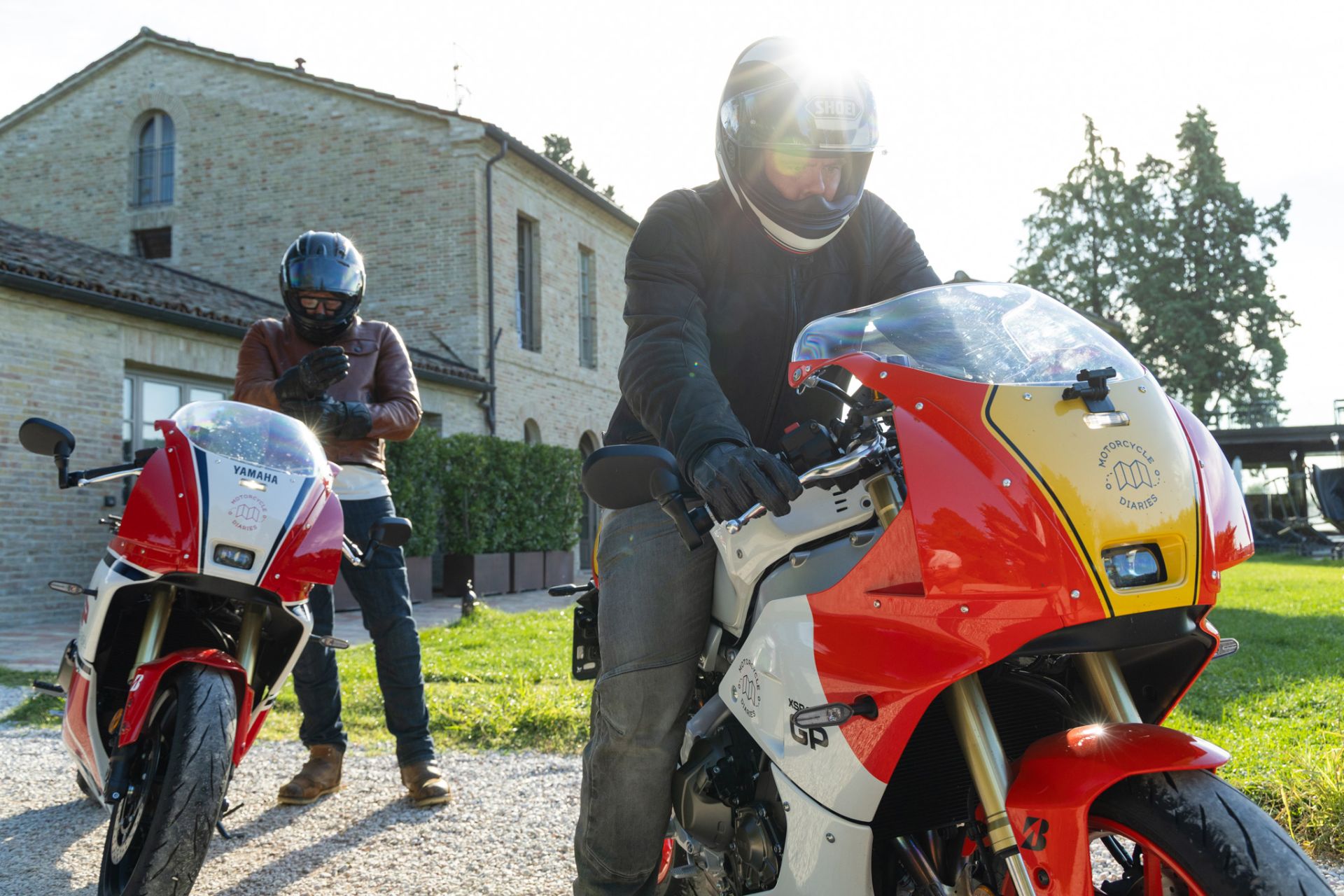

First stop is Imola, only a short blast from Misano, in the region of Emiglia-Romagna. A region not only touched by God according to the locals, but graced by automotive deity that has made Italy petrolhead heaven. And the city park of Imola is very much a part of it all. It’s here Pieter is spectating a race for the Italian championship. Being Italy, you can simply do so from the parking lot, watching the blindingly fast run up toward the infamous Tamburello corner.
Pieter also brought his XSR900GP, but his has the more sinister black and grey original colour. And he is here to decide what colour it should be. As he eats, sleeps and breaths racing, it must be historic racing colours. But even in black, he likes the XSR GP for the front cowling alone. With a shape based on that of the ‘80’s YZR’s, but also the OW01, the FZR’s and YZF’s, it oozes racing no matter what colour.
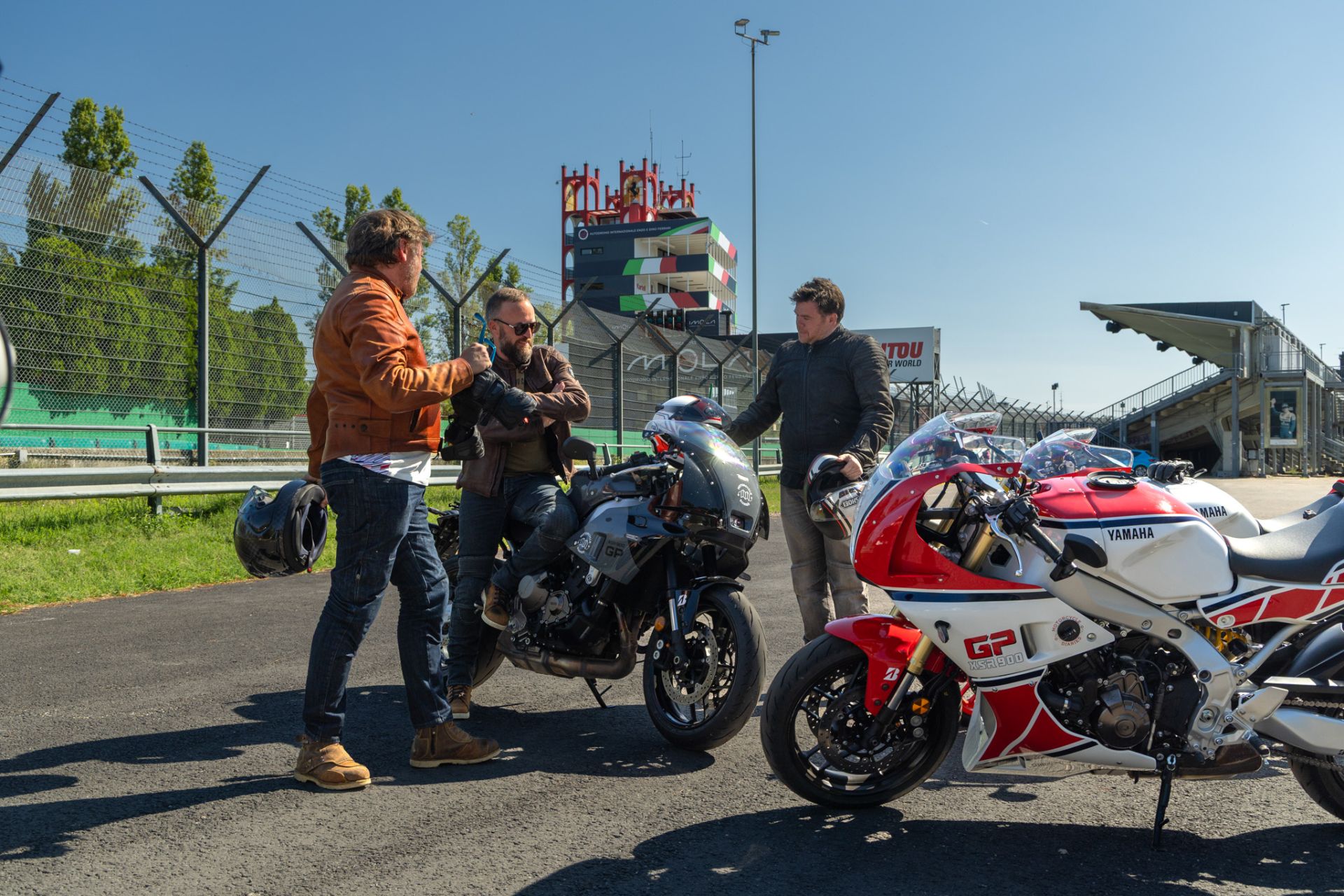
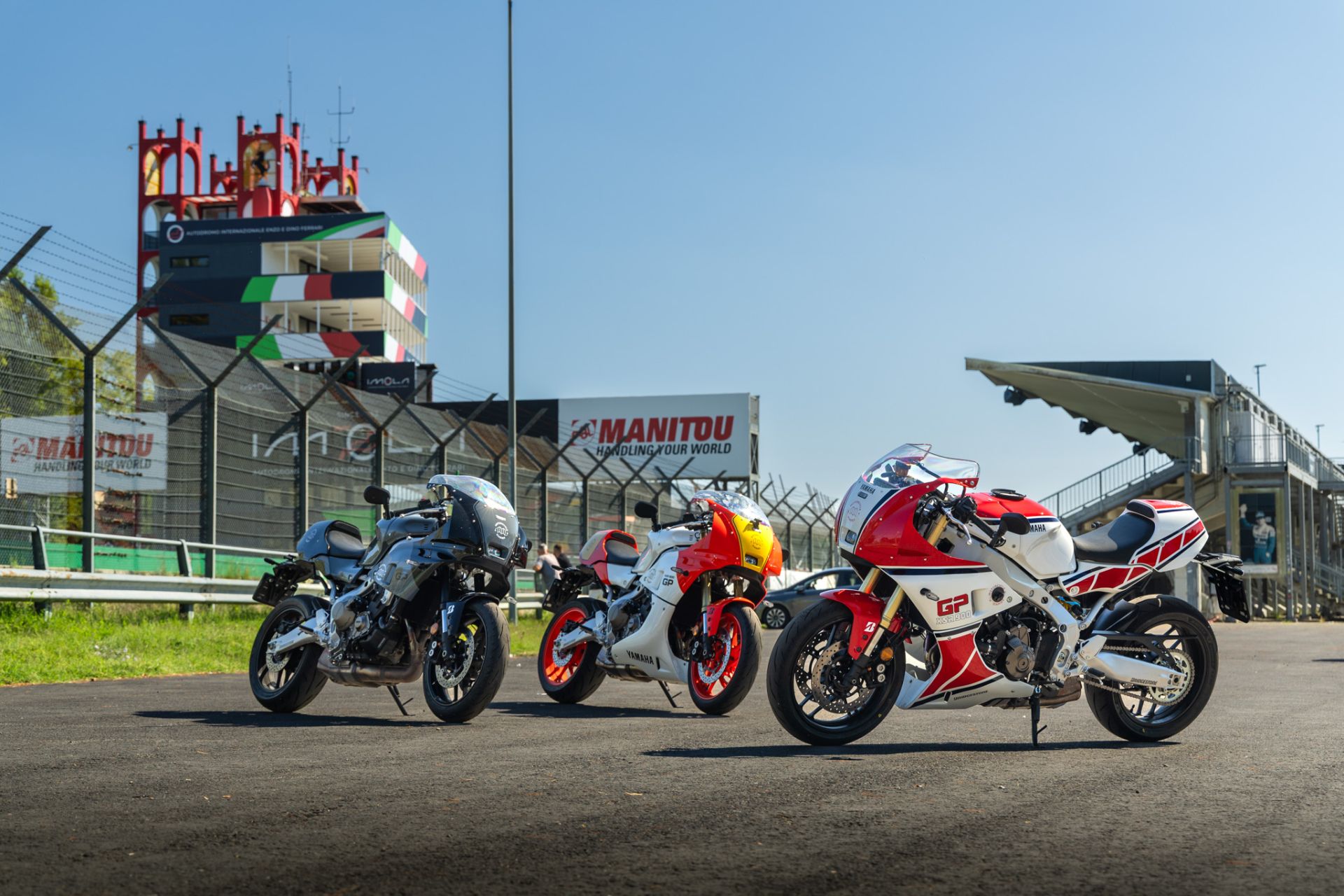

Pieter and PJ go back a long way, but James and Pieter hit it off from the word go. James immediately gets drawn into Pieter’s decision making process, but from a more professional perspective. It turns out Pieter has two firm favourites. It’s either the very historic white and red striped colours from the early ’70’s, worn by the riders such as Read, Ivy, Duff, but most particularly Jarno Saarinen. The ‘Flying Finn’ caused a sensation with a riding talent never seen before, honed in his days as an ice speedway rider and expressed by a distinctive riding style dragging his knee along the asphalt. Unfortunately his career cut short on that faithful 20th of May in 1973, when Saarinen got killed at Monza in tragic circumstances he nor his talent could have prevented.
It’s the reason why Pieter was waiting here and not at Monza. Because earlier in 1973, Saarinen rode the Imola 200 mile race, probably the most prestigious European race at the time, attracting riders from all over the world as part of the European Formula 750 championship, yet Saarinen opted to take part on his red and white works TZ350. And won. That would be like winning a MotoGP-race on a Moto2 bike today.
The Imola 200 was also the first race Kenny Roberts won on European soil, having made his European debut at the same event three years earlier. The very American Roberts was impressed by the passionate 140.000 fans, that seemed like a far cry from scruffy dirt tracks in the States, where Roberts had honed his skills to a level no European could match. Flying over from the States in 1977 as the American champion, Roberts won the 1977 Imola 200 against stiff opposition in a style he had very much borrowed from Jarno Saarinen. Roberts rode the famous yellow and black speed block colours used by the American Yamaha importer. Colours he would make legendary winning his first GP500 title in 1978 and consolidating in 1979 on his way to a hattrick of world titles. And Roberts won his last ever 500 GP in 1983 at Imola in the Marlboro colours, so Roberts’ career came full circle at the legendary Italian track.
But all the reminiscing about racers and their colours is lost on PJ, who wants to get on the road again. But the roads aren’t very cooperative. The only entertainement is provided by slippery roundabouts.
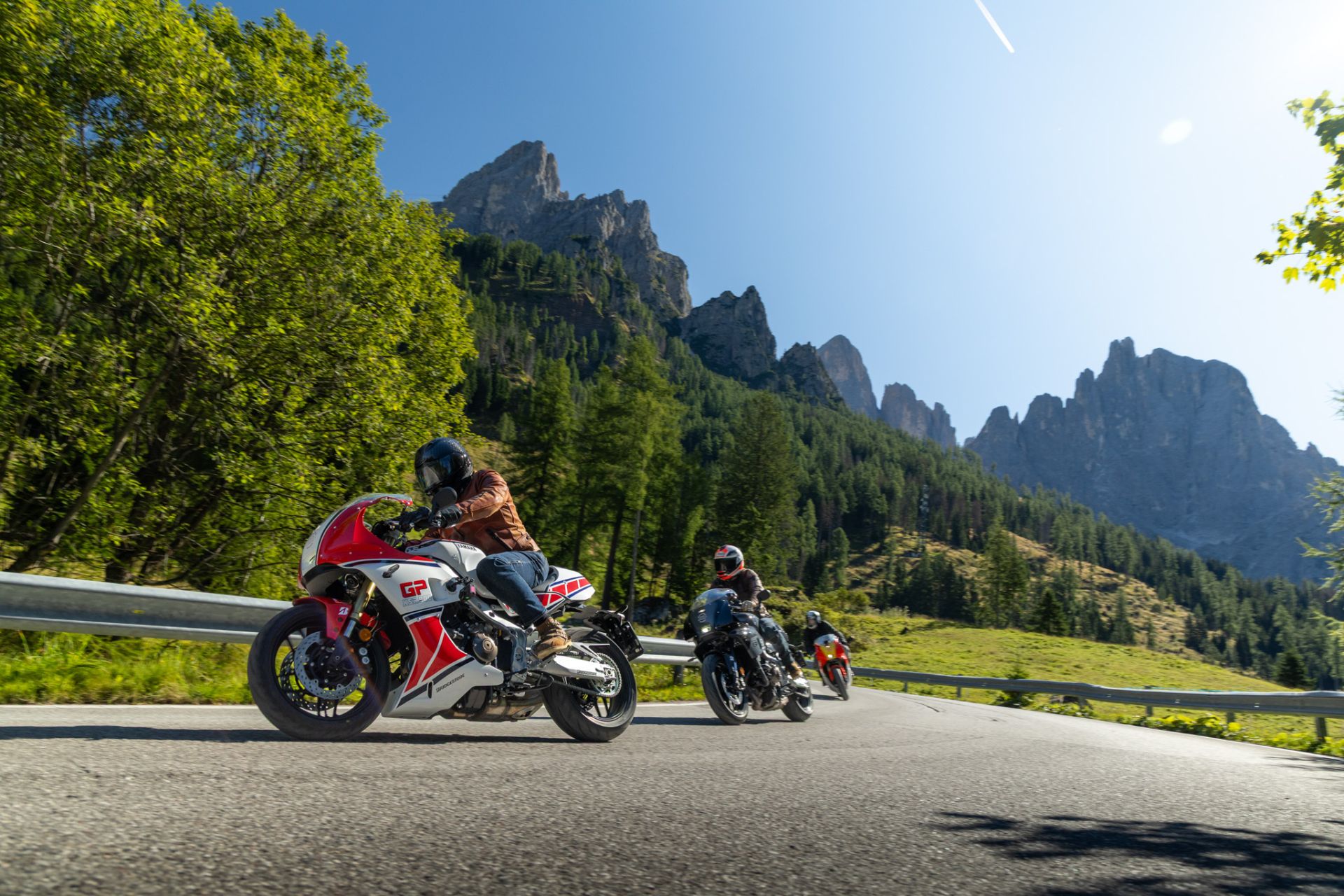
The overnight stop at Asolo makes up for it. The town is pressed against the Dolomites and provides us with a spectacular view over the vast plains we just crossed, a passing thunderstorm and the vineyards who are being harvested. No wonder this area was of major military strategic importance, as the memorial on Monte Grappa proves. A history that is not easily digested, not even with help from the after-dinner drink that got its name from these hills. But it al means we can start the next day sure of better roads in the Dolomites. And even if we don’t have them to ourselves, the XSR’s seem to rise to the occasion. The fast and flowing roads are a joy and you feel the presence of the Trei Cime di Lavaredo lurking over your shoulder, the famous peaks that litteraly make the Dolomites stand out.


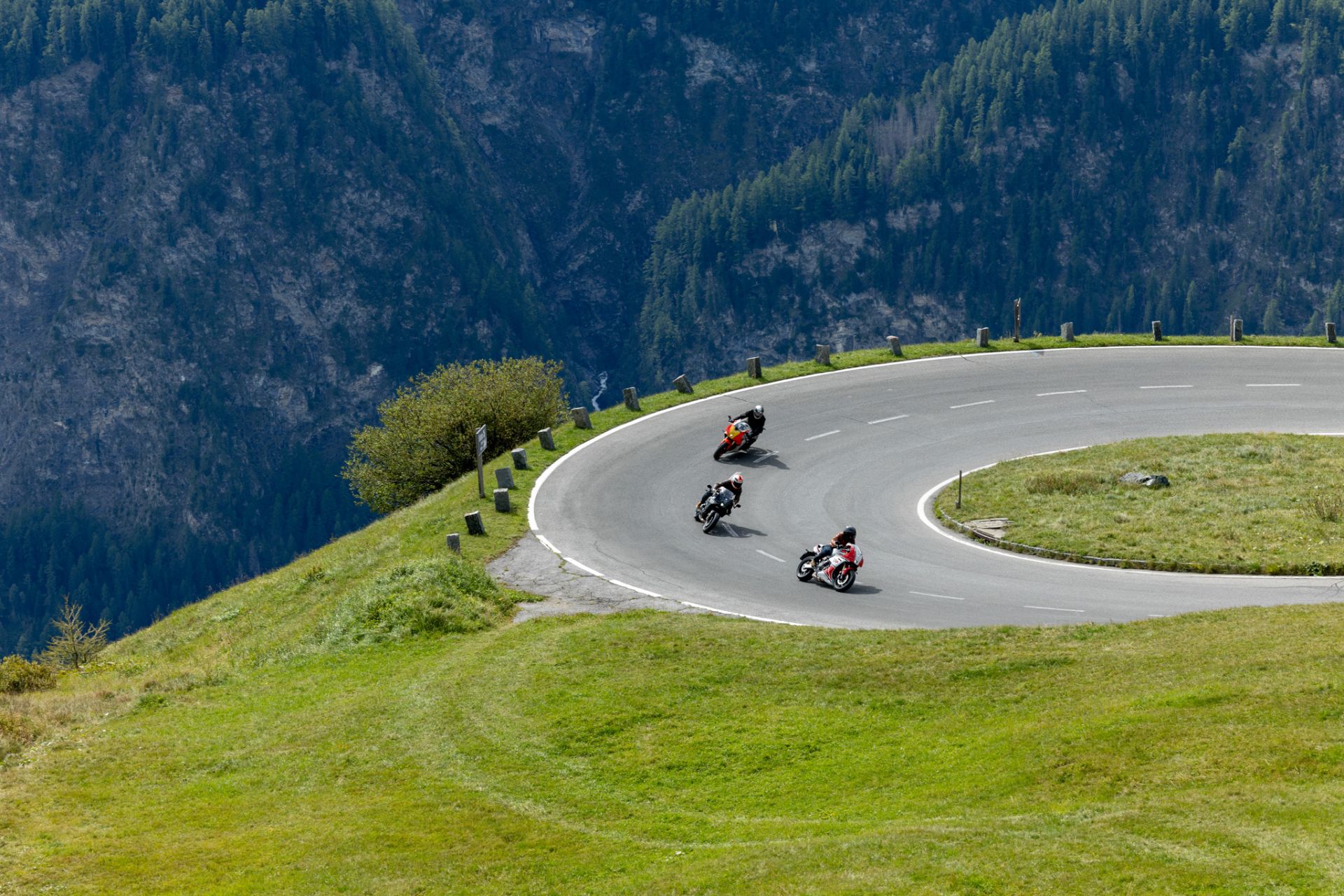
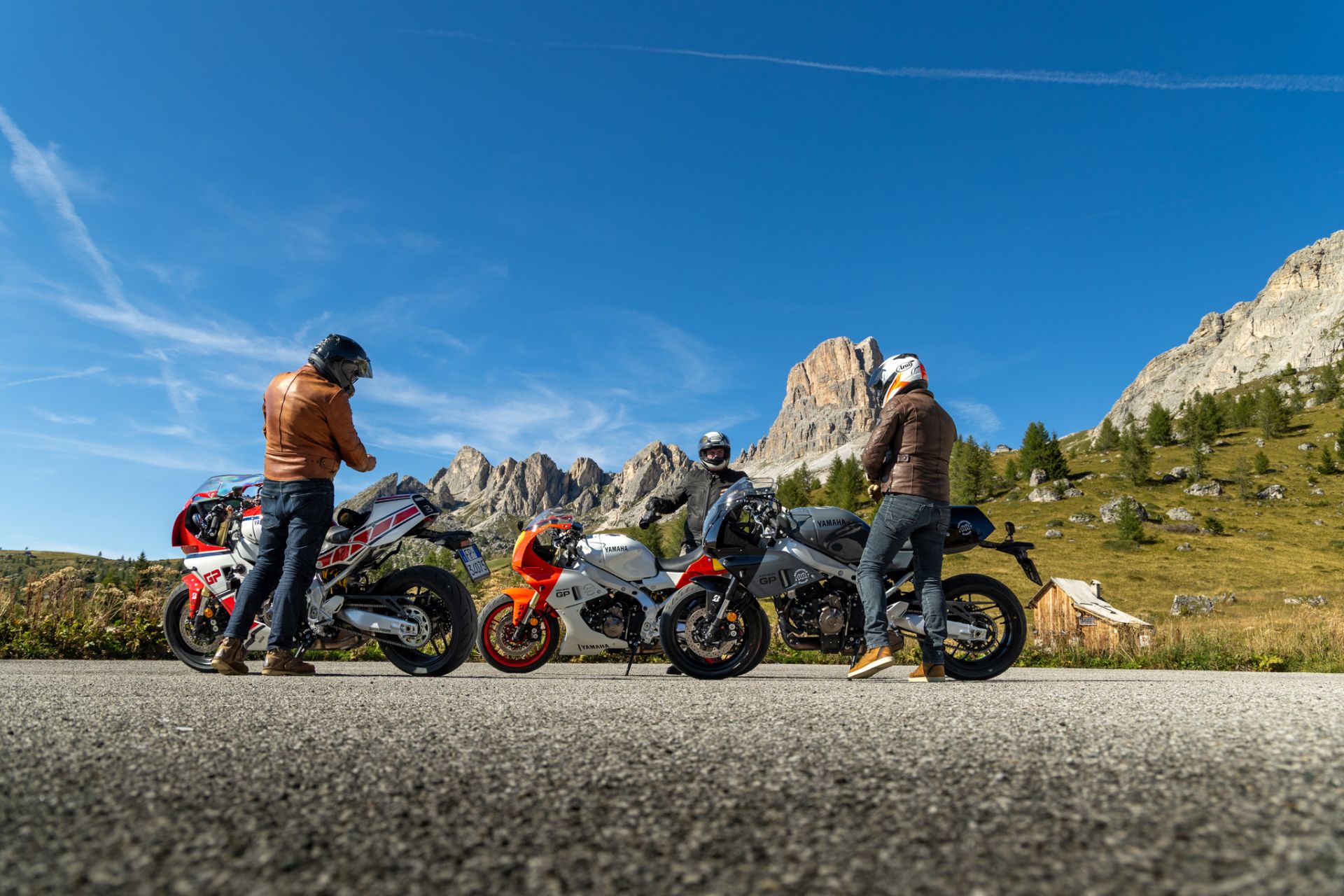

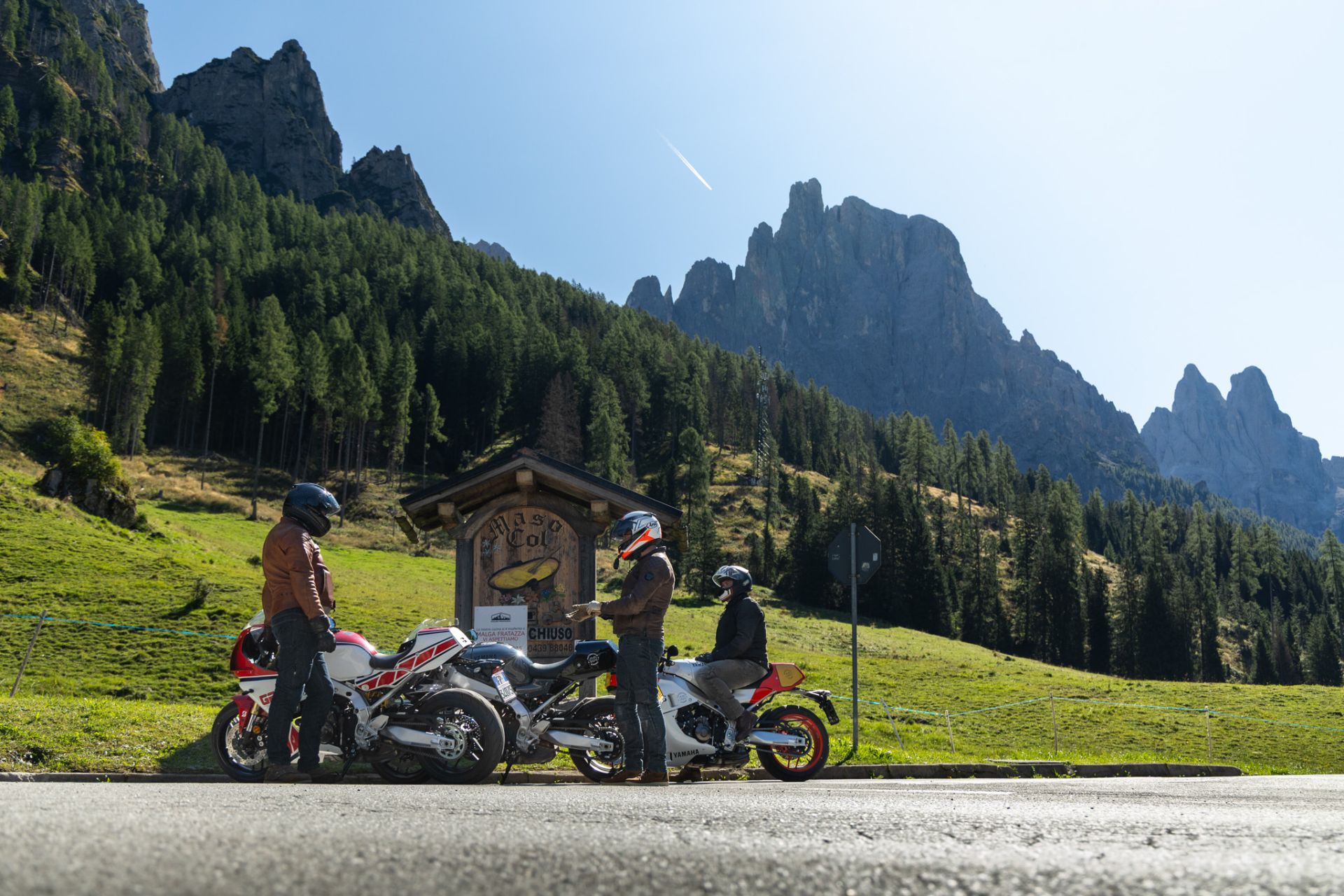
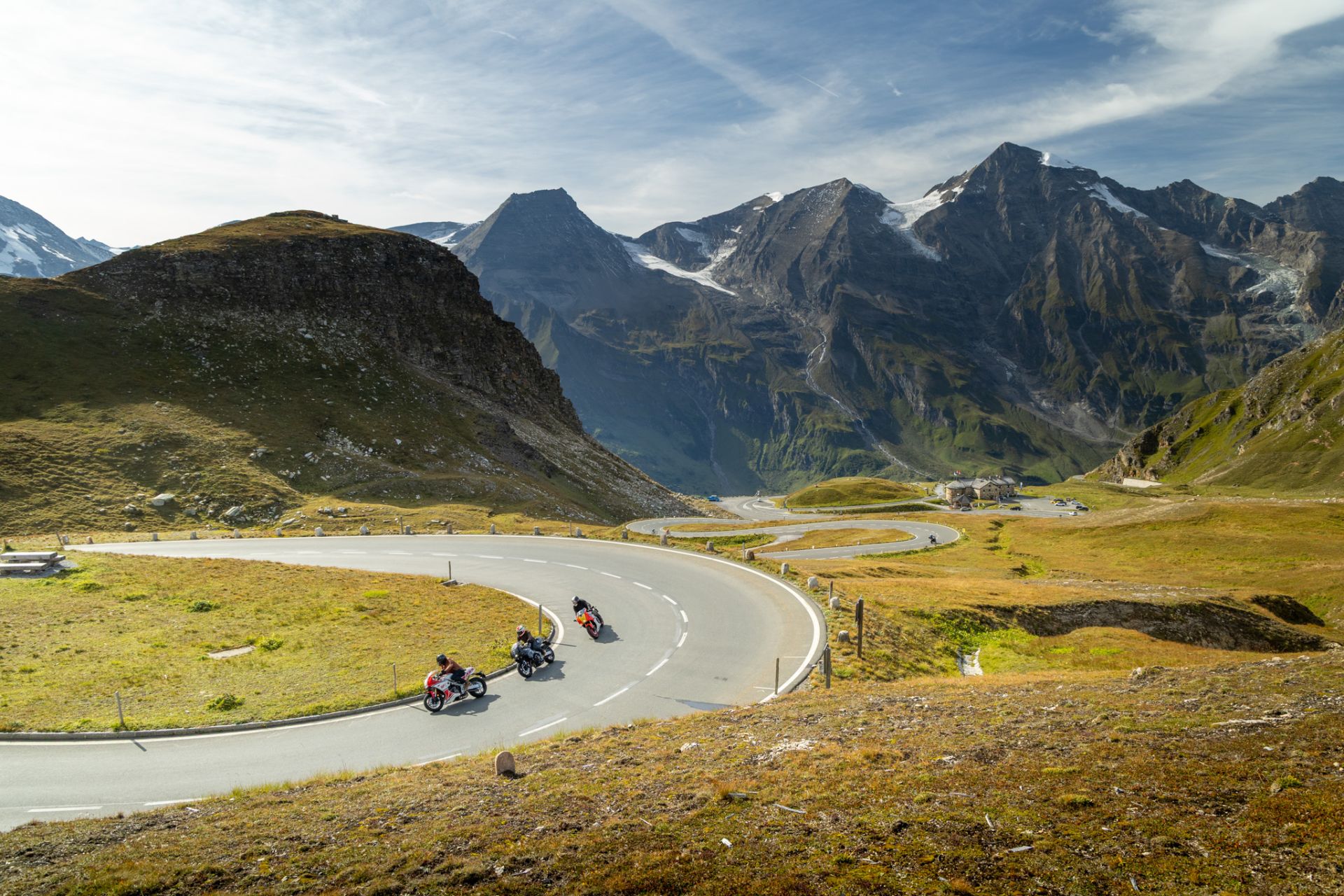
After the tyres get firmly rounded again on famous passes like Pordoi, Gardena and Sella and Pieter burning a hole in the right knee of his jeans, emulating his heroes, the XSR’s get parked for the night. A very cold night at over 2.000 meters of altitude. It makes for a cold morning start for the jump towards Austria and the most famous road every motorcyclist needs to ride at least once: the mighty Grossglockner. A beautiful stretch of toll road that is worth every penny, with the XSR’s seemingly enjoying the ride as much as the three man in the saddle.
Taking the Heiligenblut start, the view on the border of Carinthia with Salzburg takes away what little breath you have left at this altitude. A feat that is repeated near the Edelweisspitze where you start to descend again. We spend the night literally at the foot of the Grossglockner, in Fusch an der Grossglockner. The hotel informs us that our stay there granted us a free pass over the Grossglockner, so if you ever book a stay near the high alpine road, inform if a pass over the toll road is included.
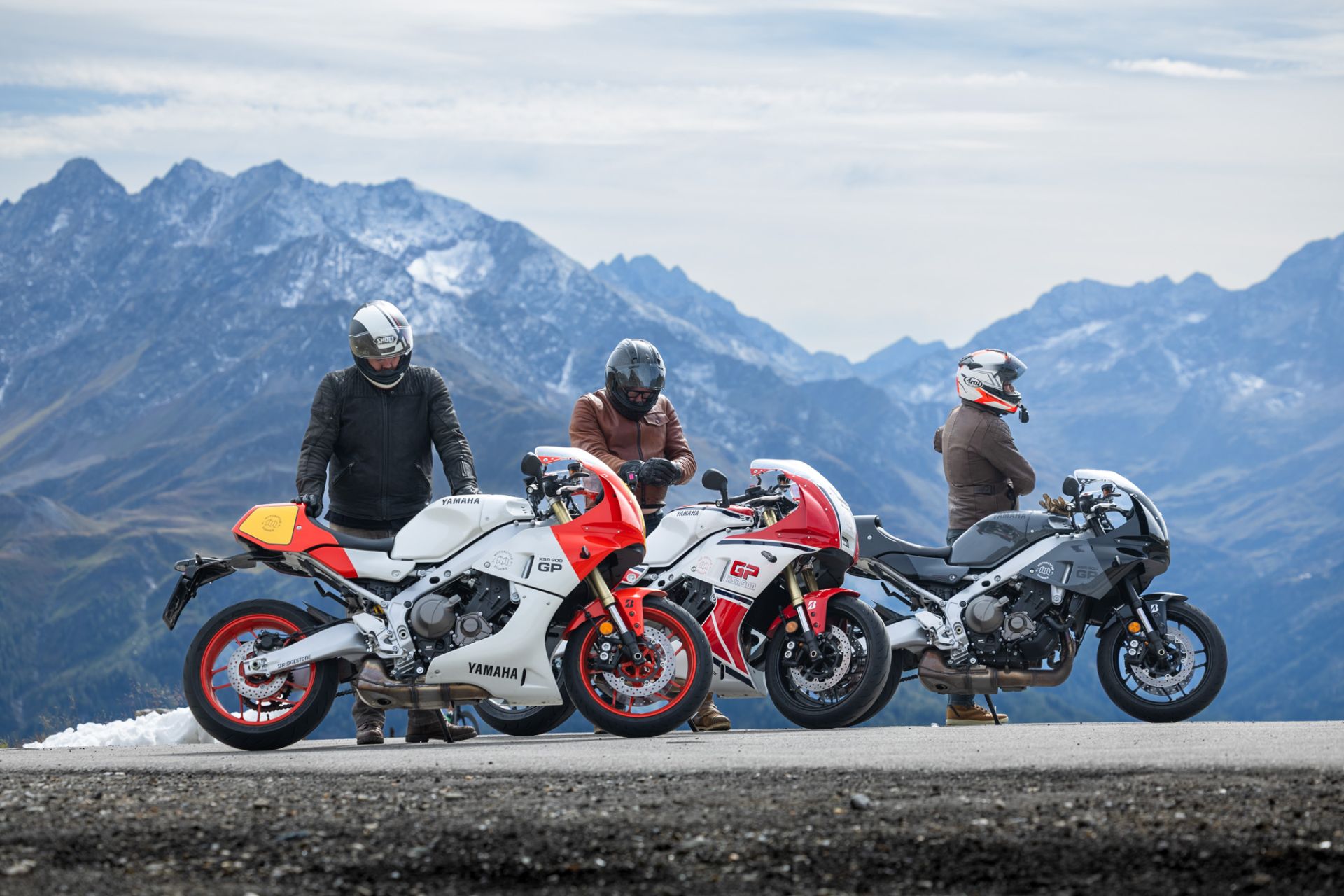


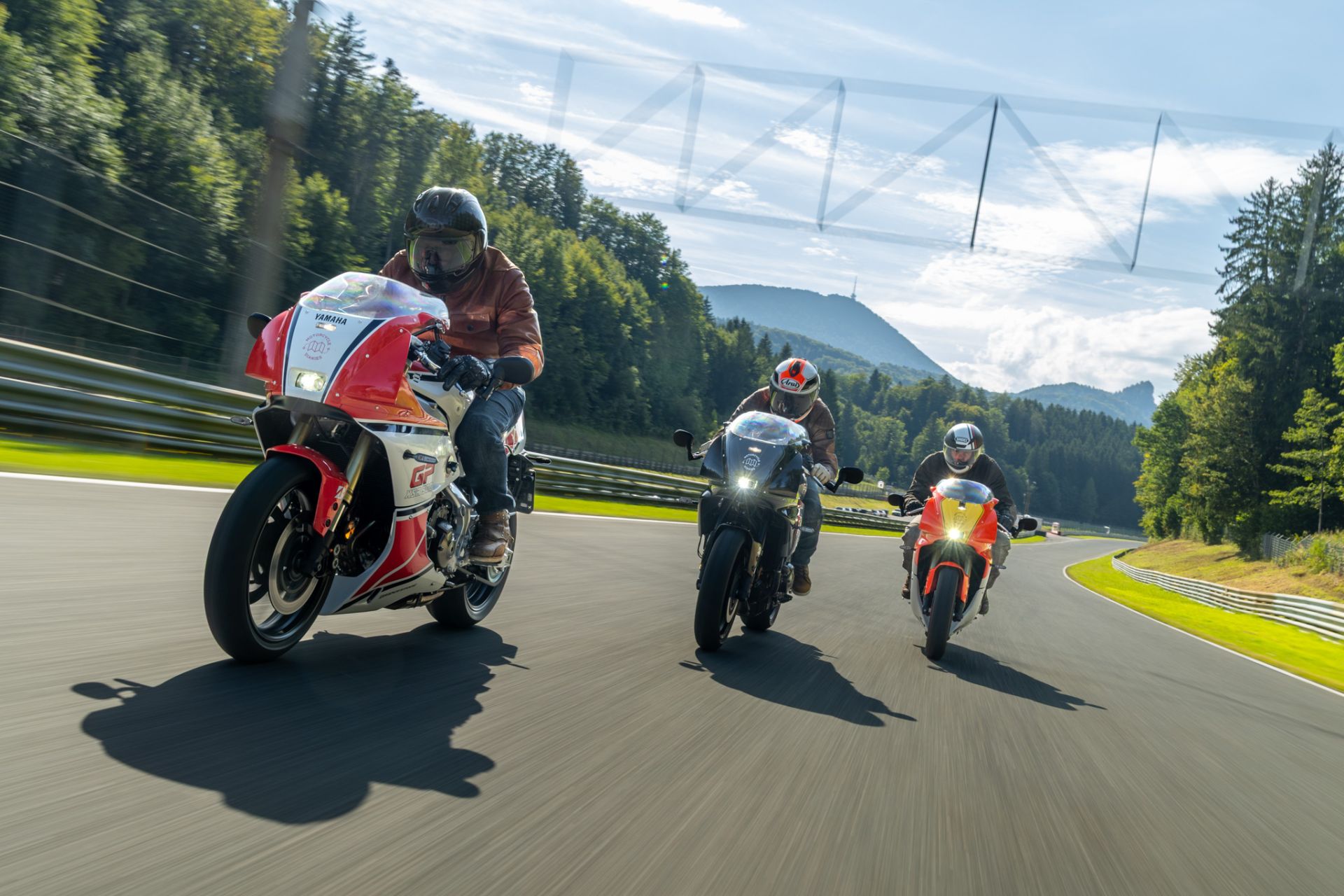
Towards the Salzburgring the roads get flatter and less twisty, but the Salzburgring makes up for that. This track, opened in 1969 in a an almost secret valley might only count a handful of real corners, but only the home straight is effectively a straight. It takes no time to learn it but is hairraisingly fast, with enough curvature and undulation to make things very interesting. This is a track that seperated the man from the boys. And Jarno Saarinen was the man in 1973, winning the 500cc-race here in what was his and Yamaha’s first atttempt at the top class in GP-racing. And for Saarinen it would prove his last. His win, 25 seconds in front of Yamaha-team mate Hideo Kanaya was a dominant display of the red and white Yamaha colours after already winning the 250cc race, his third win in a row in as much races, making him a firm favourite for both world titles. But as said, the next race at Monza put a tragic stop to those expectations.

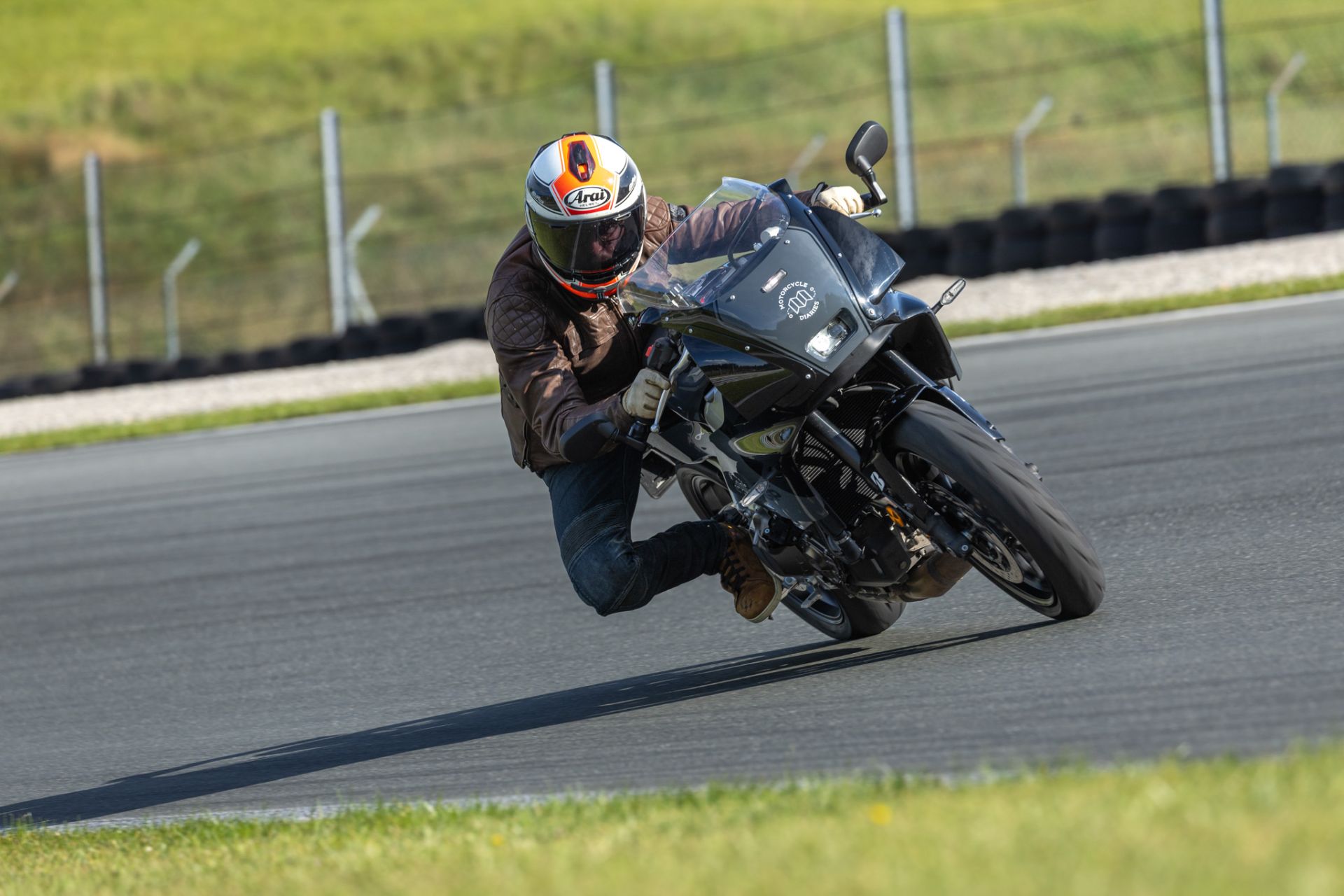

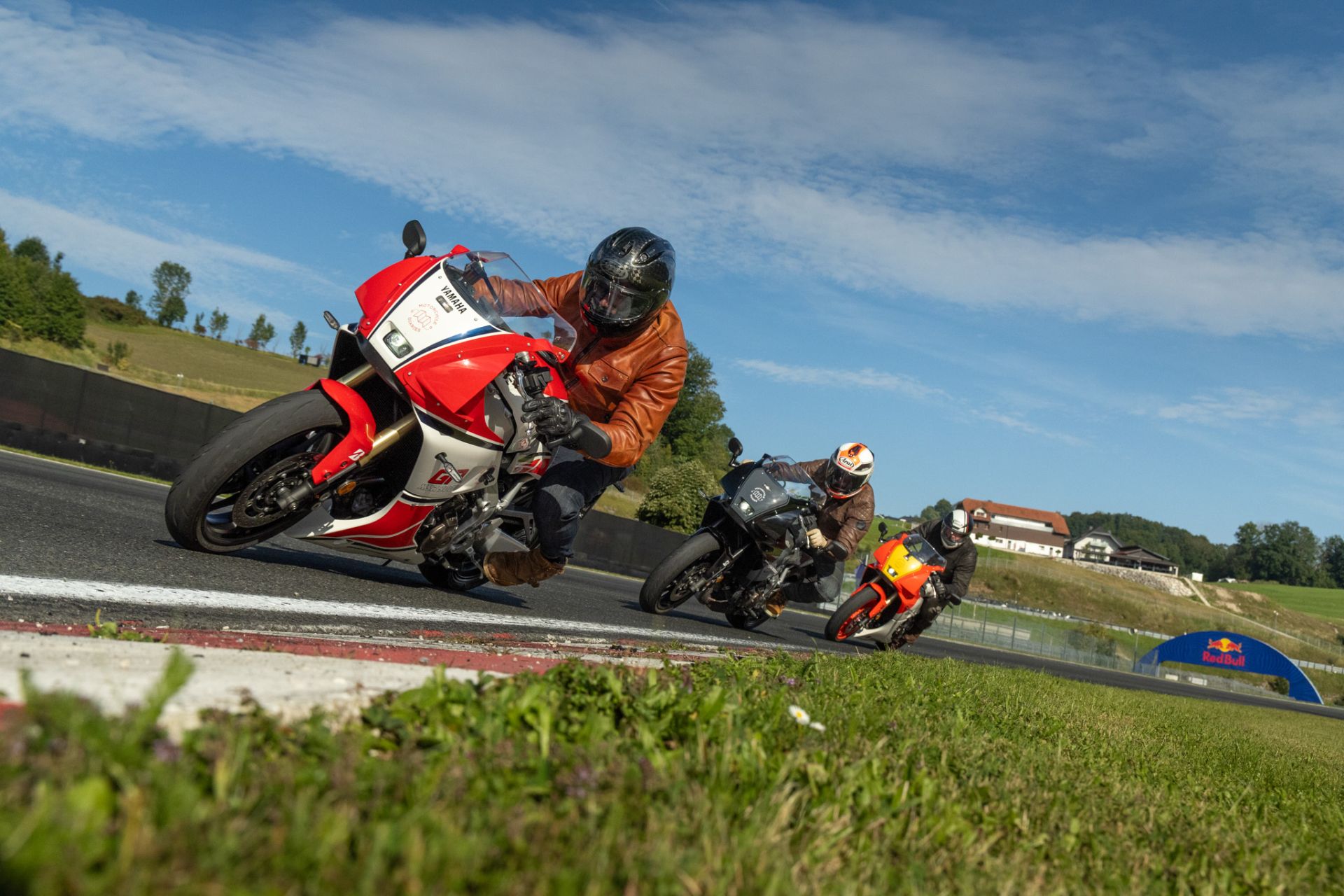
Kenny Roberts won his first 500cc race here in 1978, on his way to becoming the first American world champion in top class of motorcycle racing. Roberts rode the hornetlike yellow and black YZR. It proved a start to a hattrick of victories and a crucial slingshot towards his first title crown. ‘King Kenny’ showed nerves of steel.
Even at the reduced speeds the three XSR’s get to experience a few laps around the Salzburgring, the Bridgestone S23’s are on guard. How Roberts clocked an average of about 175 km/h with a frame, suspension, brakes and tyres that were not nearly as good as on the XSR, is beyond the three riders. Let alone Saarinen one a very first YZR500, that still had threaded tires. Even PJ seems impressed by how fast they went in circles around here. It sparks another discussion between Pieter and James about which colours might have made the strongest impression here, but PJ is already halfway up the next road again before they set off in pursuit.

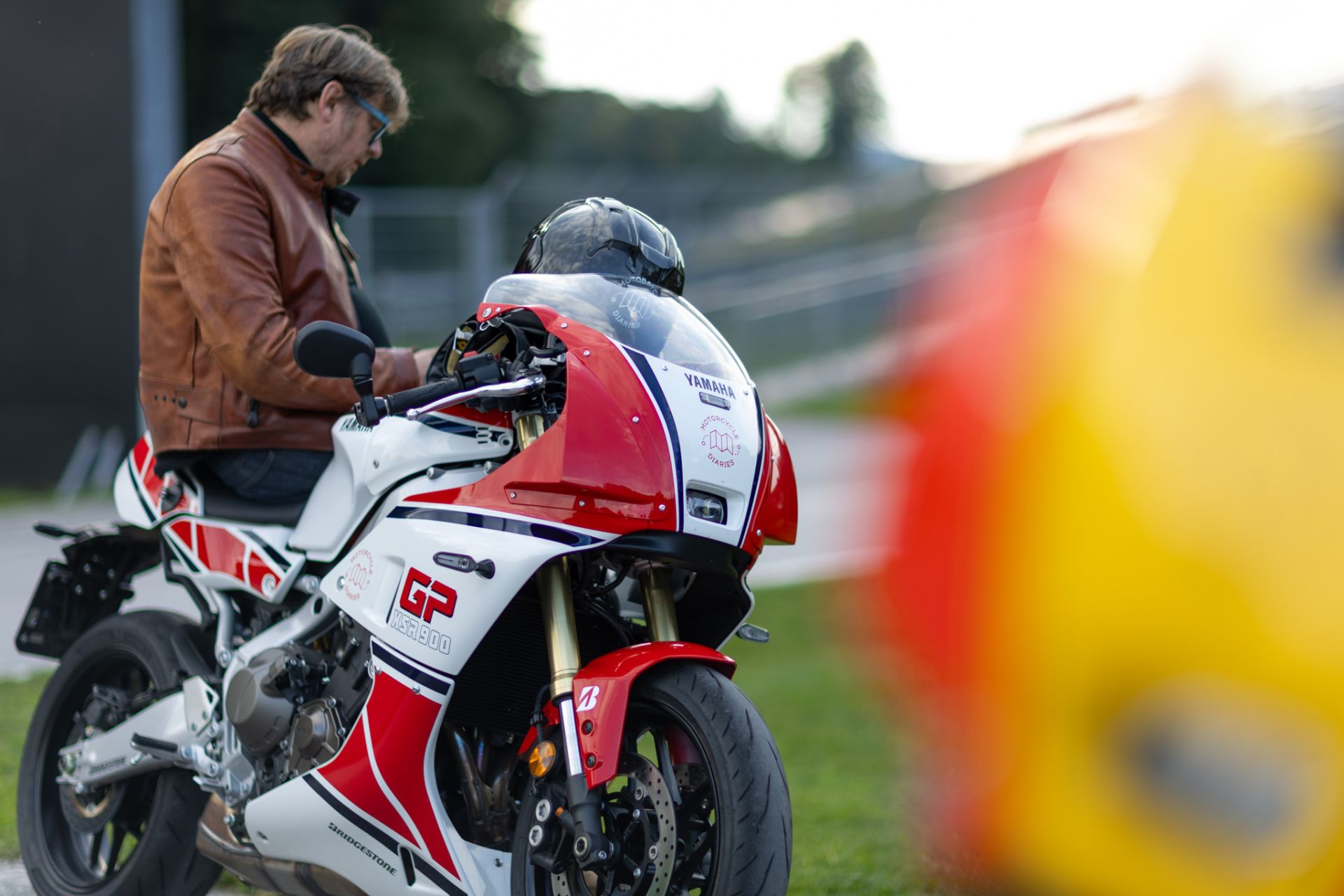

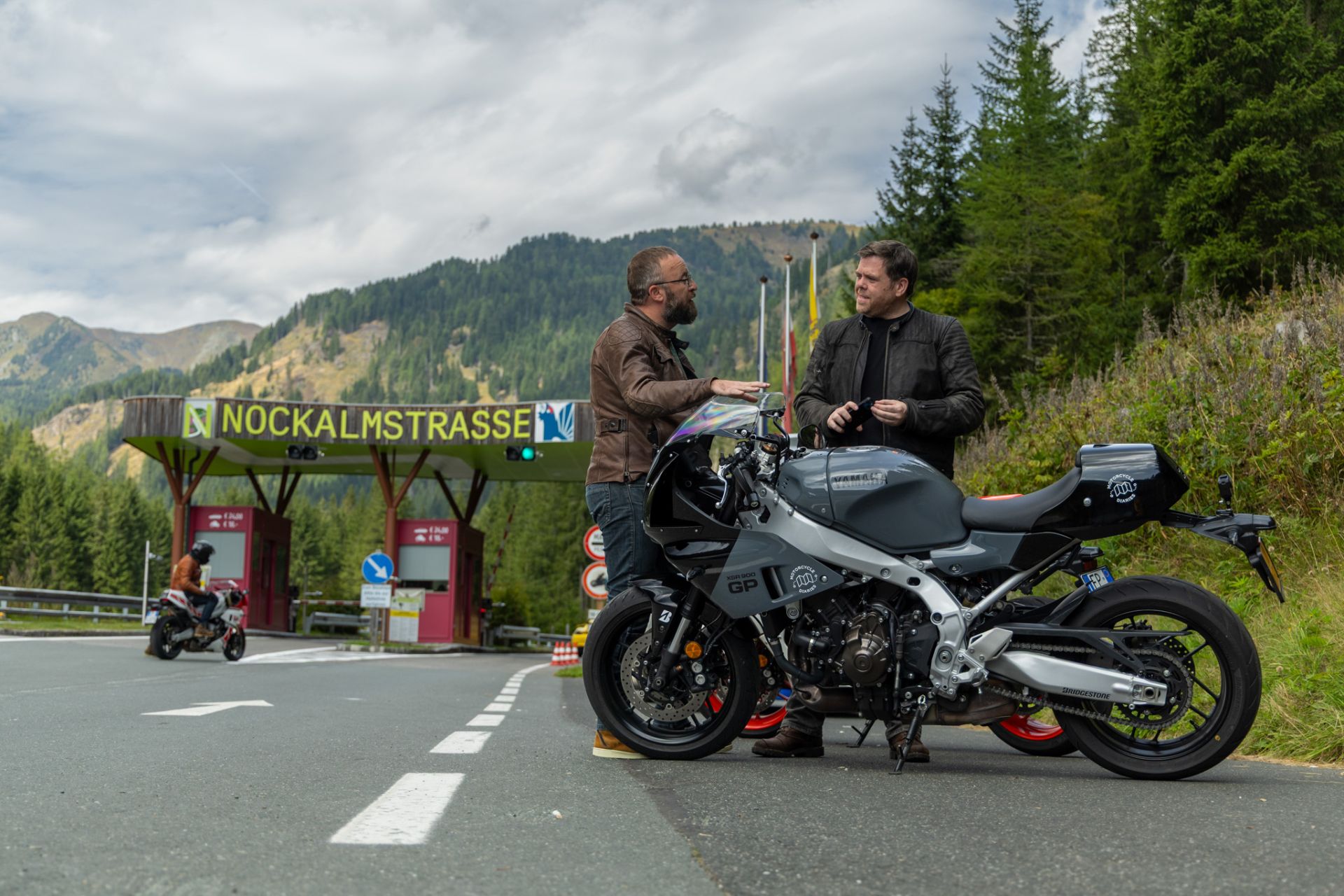
The Austrian roads prove fluent and flowing and the ETA on the GPS keeps dropping. Until we get tot he Nockalmstrasse. This is another toll road, much less famous and less majestic than the Grossglockner, but it is a hidden gem, with the ‘five fingers’ section proving especially sensational. Maybe that’s why the local cow herd is spectating next to and sometimes even on the road. Cow excrement on the road makes for an extra challenge and some cleaning later that day.
Unfortunately, the weather isn’t holding up. Luckily we escape serious rain before we reach our next hotel near the Slovenian border.
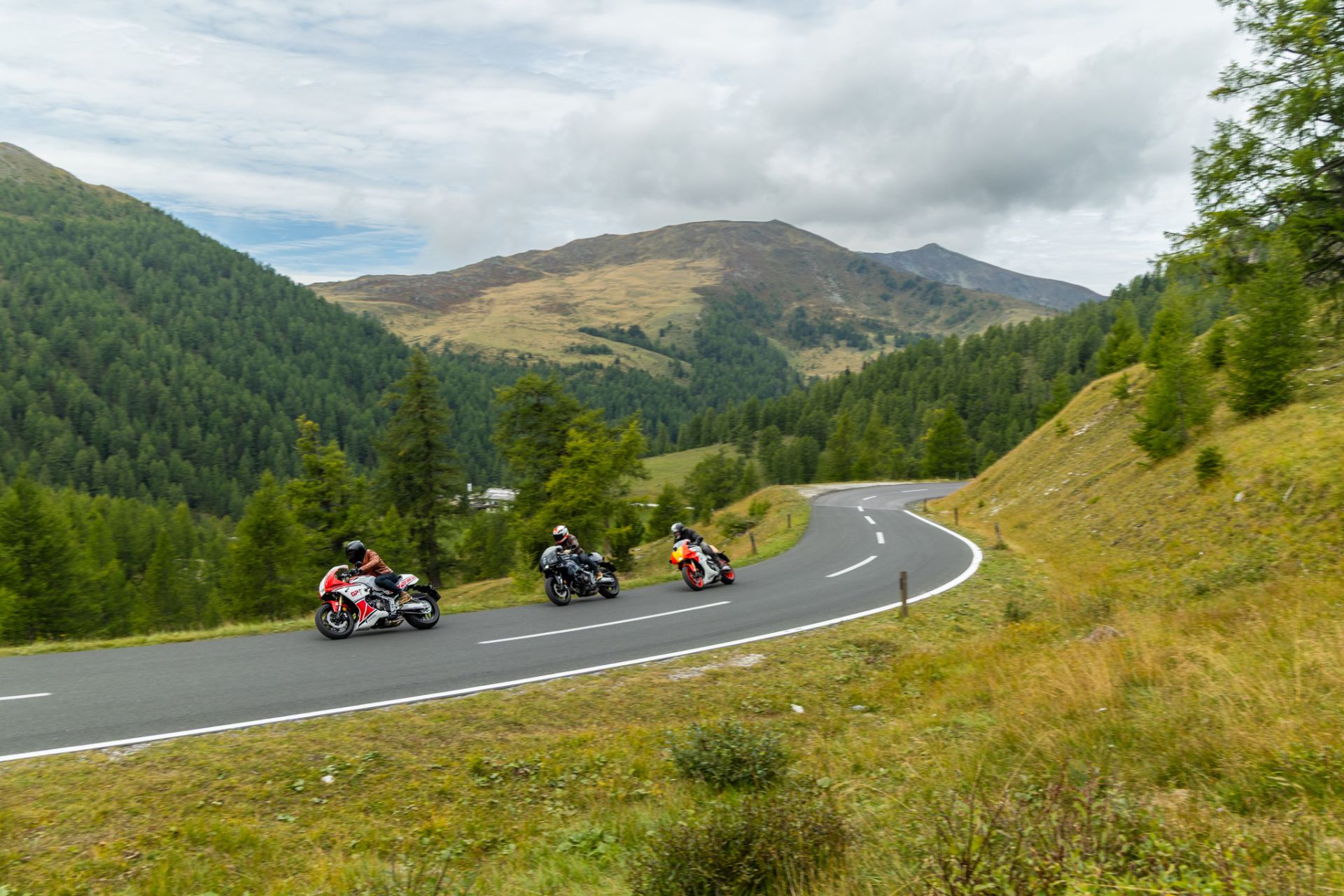


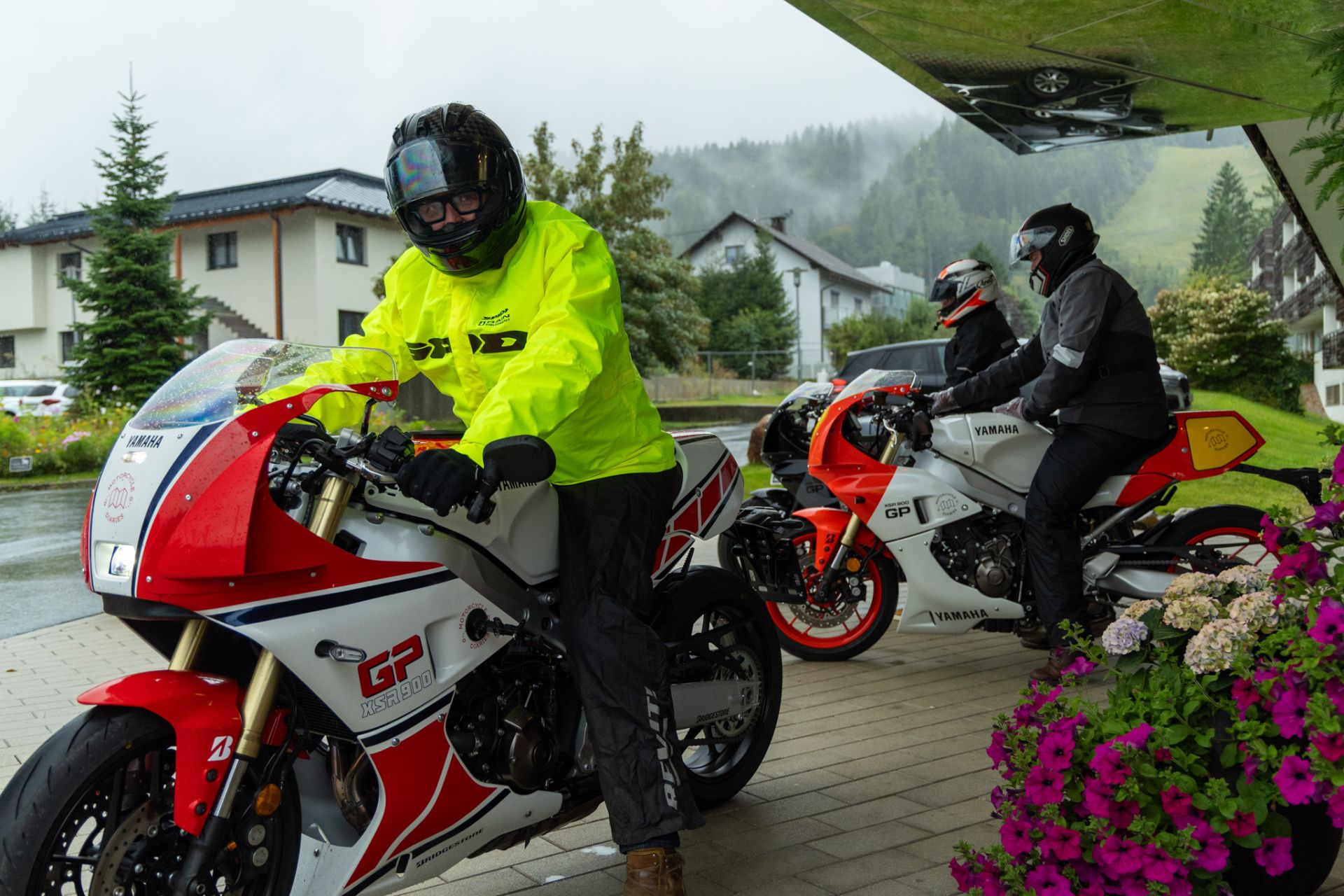
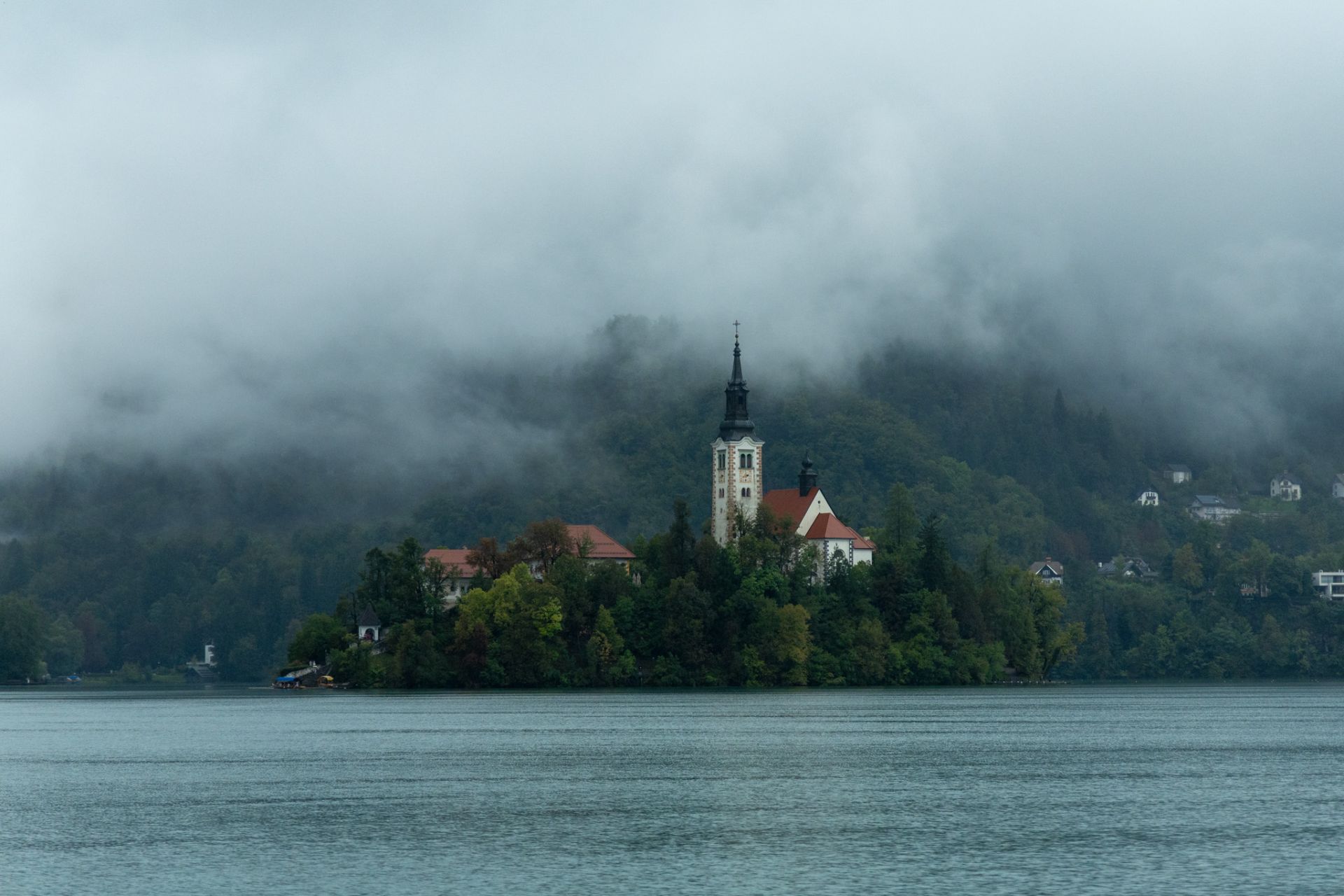
But next day we are not as lucky. The rain is bucketing down and we reluctantly pull out all our rain gear. The idea was to ride trough the Trigalv Park, but we stick to the motorway as it makes no sense riding longer than absolutely necessary in this type of weather. It’s only the next morning we get to enjoy the beautiful views provided by Lake Bled and the surrounding mountaintops. The sky looks less menacing and the roads are drying, so we set of again.
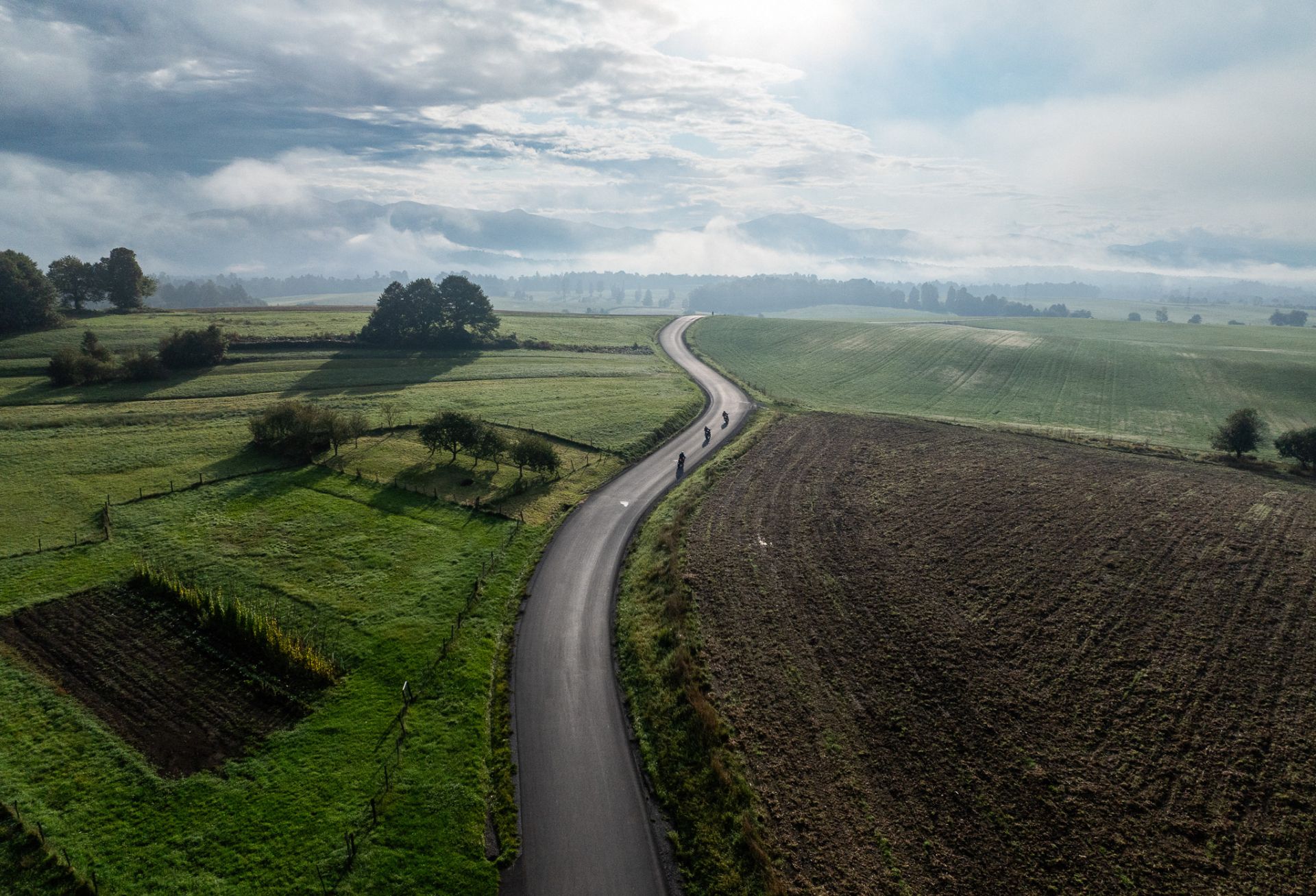
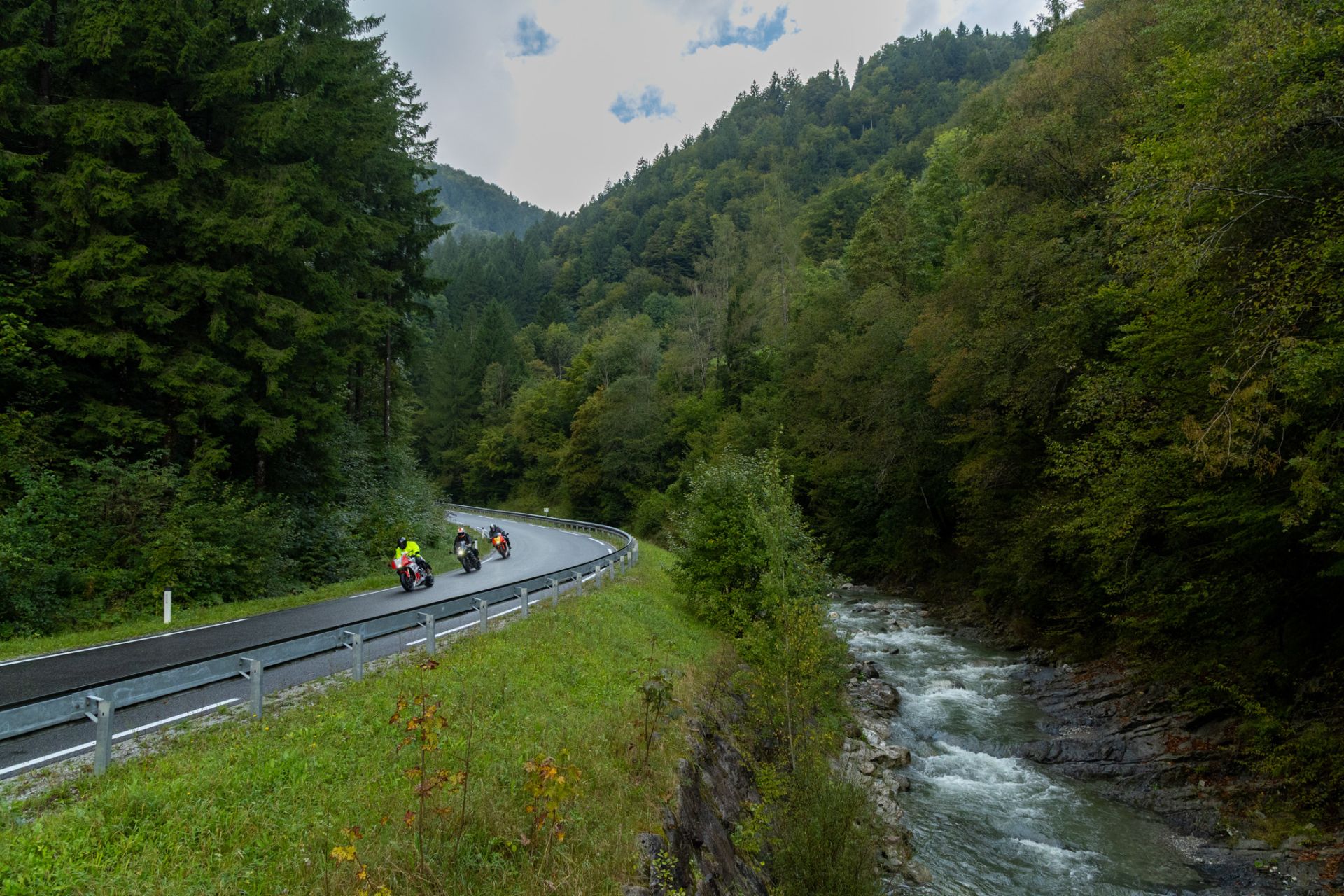
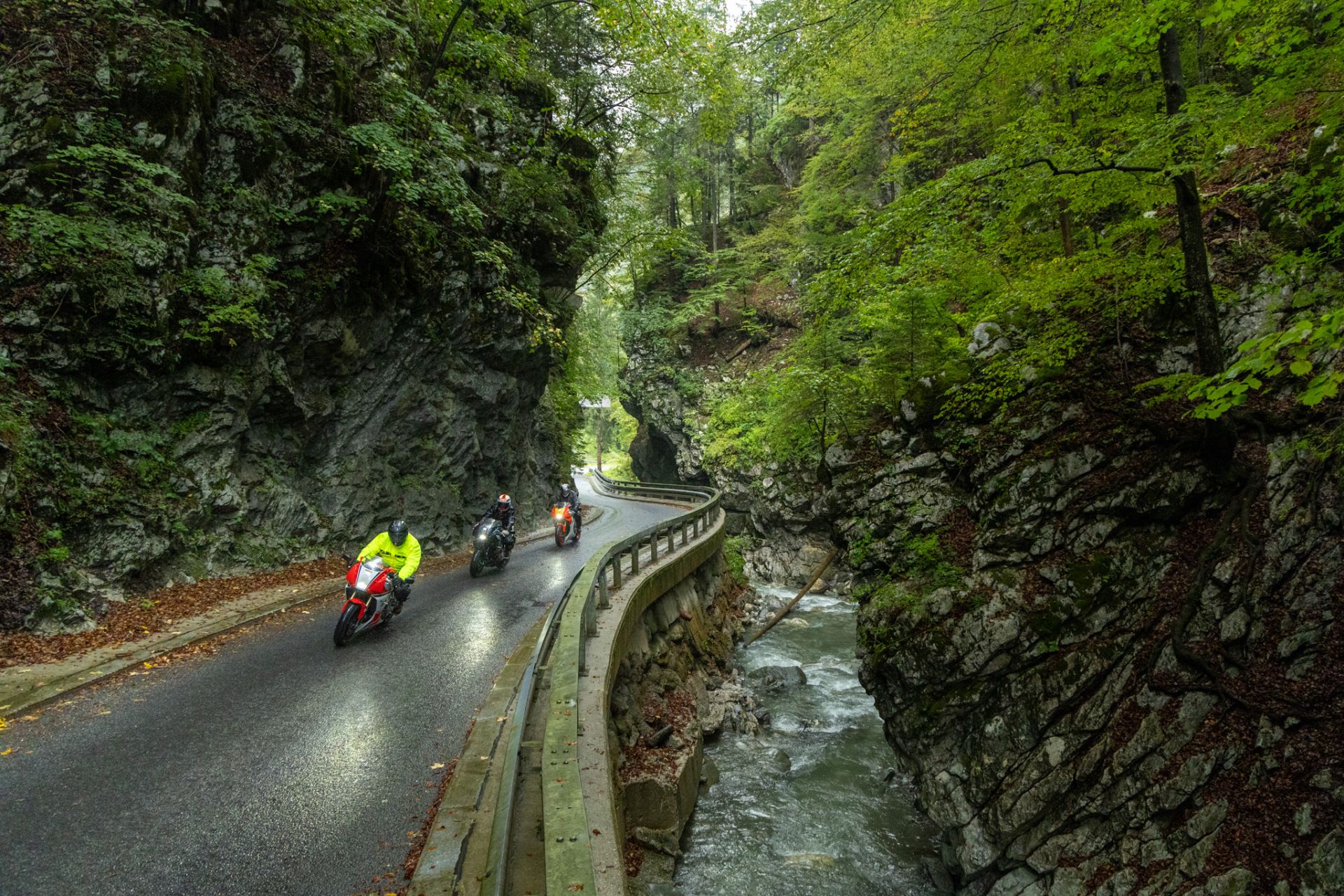
The 635 road passing Kropa and Jamnik is a discovery, even when the asphalt seems far from new and the rain returning with a serious vengeance. We even stop to shelter in a busstop because it got a bit too much to keep riding. But soon after, the sun chases the clouds away, making the small villages, friendly people and winding road along the Selska Sora all the more enjoyable. Slovenia is highly recommendable as a place to go and ride your motorcycle.
And so for the final lunge into Croatia. The Adriatic is beckoning again and the Mediterranien climate welcomes us. The roads become less mountainous, yet they wind there way through the undulating landscape in a way that reminds a little of Sardegna, making for a very enjoyable last stretch towards Rijeka and on to Opatija. This is where the Yugoslav Grand Prix was held from 1969 until 1977 on the public roads along the Kvarner Gulf on the so called Preluk circuit.
Because the track was lined by a sheer drop into the sea or sharpedged rockfaces on the other, this track was considered by some as the most dangerous to ever hold a Grand Prix. Riding around here, you get goosebumps imagining the Grand Prix machinery being guided at breakneck speeds, engines on the brink of seizing with no room for error whatsoever.
It was here Jarno Saarinen earned the full factory Yamaha YZ635, replacing his trusty Arwidson (the Finish importer) TD3 production racer, helping him to his one and only world title in the 250 class, winning four out of the last six races after the Yugoslavian GP. Saarinen didn’t finish in 1972 due to technical issues, but he did set pole position.
Yamaha won 13 grand prix here, making it by far the most succesful brand. After multiple crashes and fatalities in 1977, Opatjia had held it’s last major Grand Prix and race. And if not, Kenny Roberts would probably have led a boycott against it. As it turned out, the Yugoslav GP moved to the nearby, newly constructed Rijeka or Grobnik track. And it was Kenny Roberts who set the first 500cc pole position and winning the race there, again in the yellow and black speedblock colours. We’ve come full circle, again.
While PJ is pointing over the Kvarner Bay and mumbling something about the Jadranska Magistrale that connects with the Opatija track, Pieter and James set off towards Grobnik, yet still unsure what colour sparks there nostalgia the most. Maybe they ought to check out Hockenheim in Germany. Or Paul Ricard in the South of France. Because trips down fast memory lanes should never end as there are roads to ride and colours to pick…