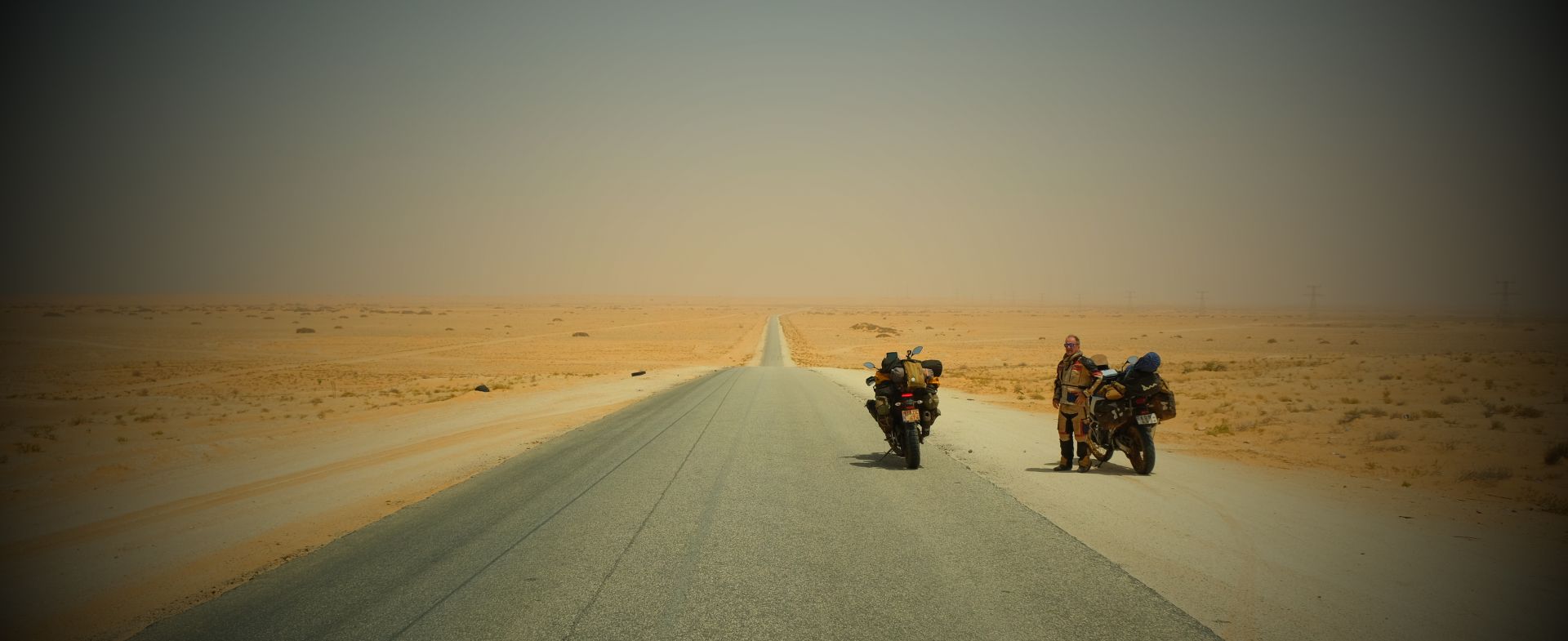
Pumwee on Wheels part I - An adventure through Africa, into Europe...

”Pumwee” is Mendé, one of the dialects in Sierra Leone which means: ‘man from on the other side of the horizon...’

Philip Tonks and I have known each other for a long time. We first worked together on a plantation in Sierra Leone in 2012, and years later we were reunited there again. In our free time, we often went on jungle trips with colleagues — by kayak, 4x4, bicycle, motorbike. Absolutely fantastic memories.

One evening in the plantation club, after a couple of beers, the idea came up to ride back home from Sierra Leone to Belgium and the UK, by motorcycle. The seed was planted. Already the week after, we started researching what type of bike we would need, where we would ride, how and where we could officially cross borders.

There was a lot of research and document preparation needed for this trip because we had less than a month of holiday together. Where can we cross borders officially? Are there bridges where we need to cross rivers? What is the distance between gas stations in the Sahara? Is there water? Where can we camp? How long are the off-road sections?

First of all, we had to order and ship our bikes to Sierra Leone, check visas and permits, as every border crossing has its own laws. We prepared tools and spare parts in case we got stuck somewhere in the middle of nowhere. We practiced fixing tires. We needed fuel and water bags to cross the Sahara. Camping gear, emergency food packs… everything had to be packed properly on the bike, keeping the balance right.

We both had GPS devices, but also maps on our phones in case we had no coverage. We made a daily road plan, but on trips like this, that’s only a guideline…

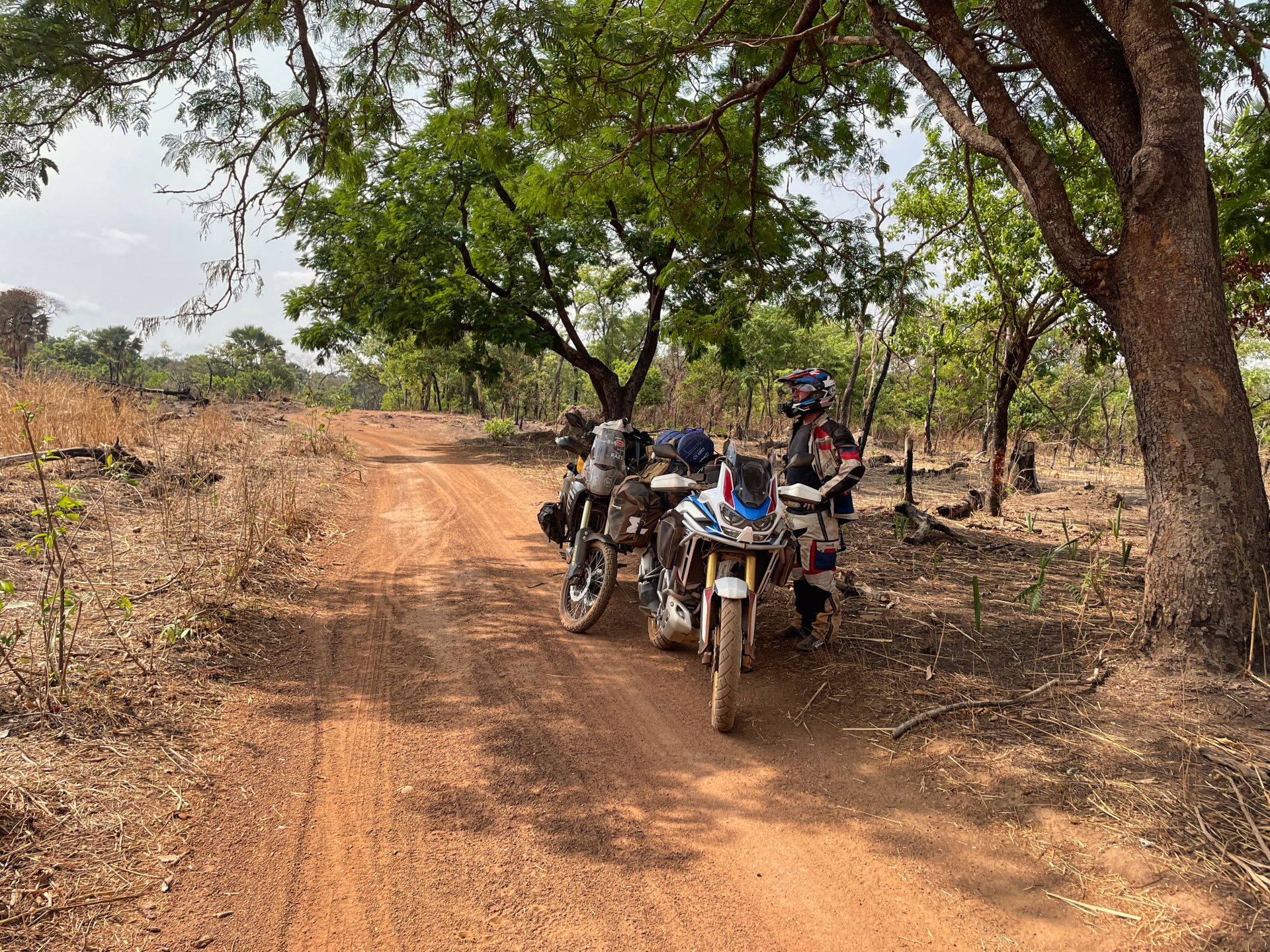
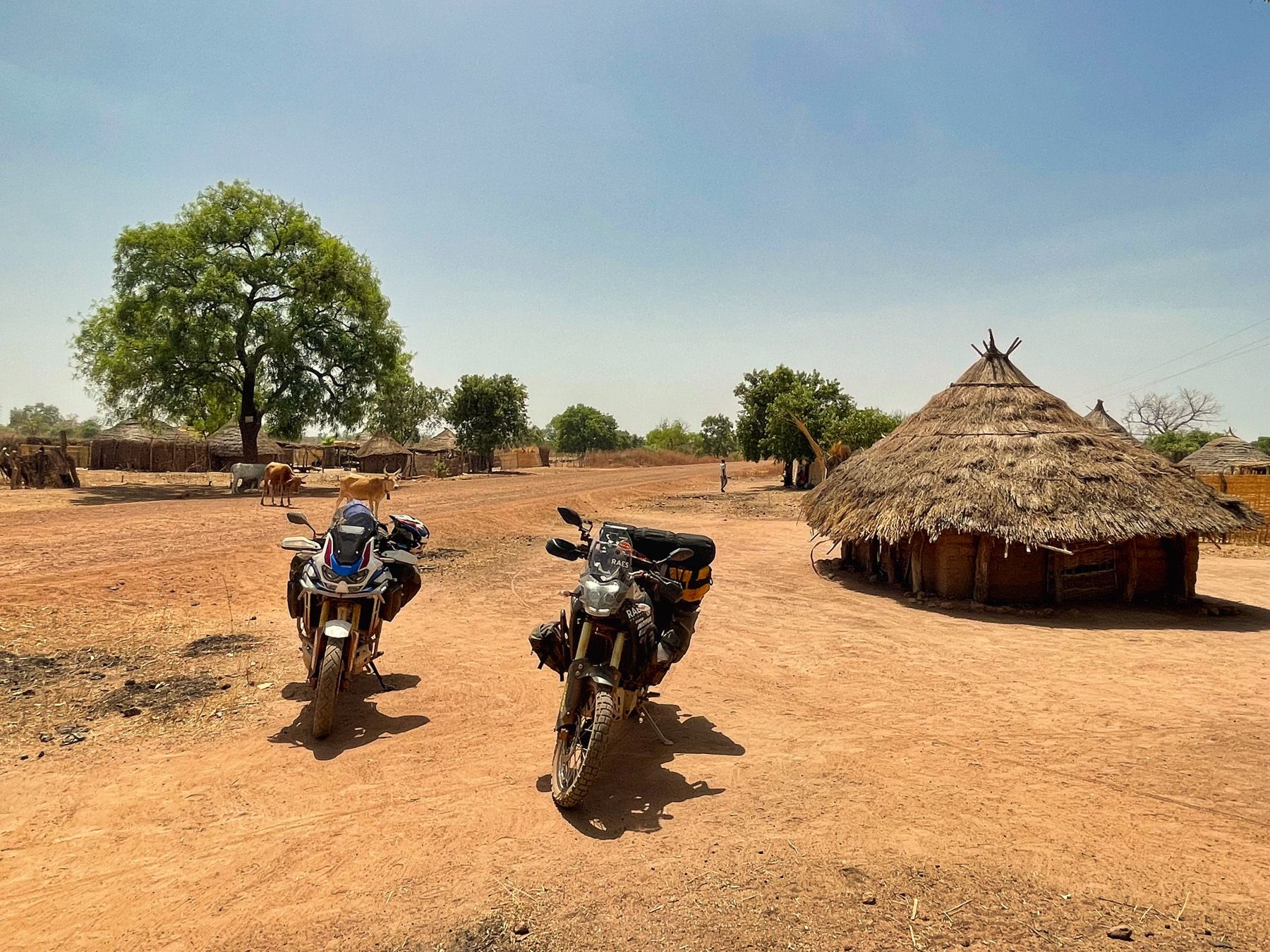
Philip shipped a Honda Africa Twin Adventure Sports 1100 from South Africa. I first brought a Royal Enfield 400cc from Belgium.

We were extremely well prepared, did a lot of trips in Sierra Leone but then... Covid happened. Borders closed. My project finished there. 

I sold my bike and moved to Ivory Coast. But the plan remained.

When COVID ended and borders opened again, I chose another bike: the Yamaha Ténéré 700. I bought it in Belgium and shipped it over. As soon as the bike arrived in Sierra Leone and our first holiday came up, I flew back. On April 26th, we finally left on our 9,000 km adventure…

Sierra Leone

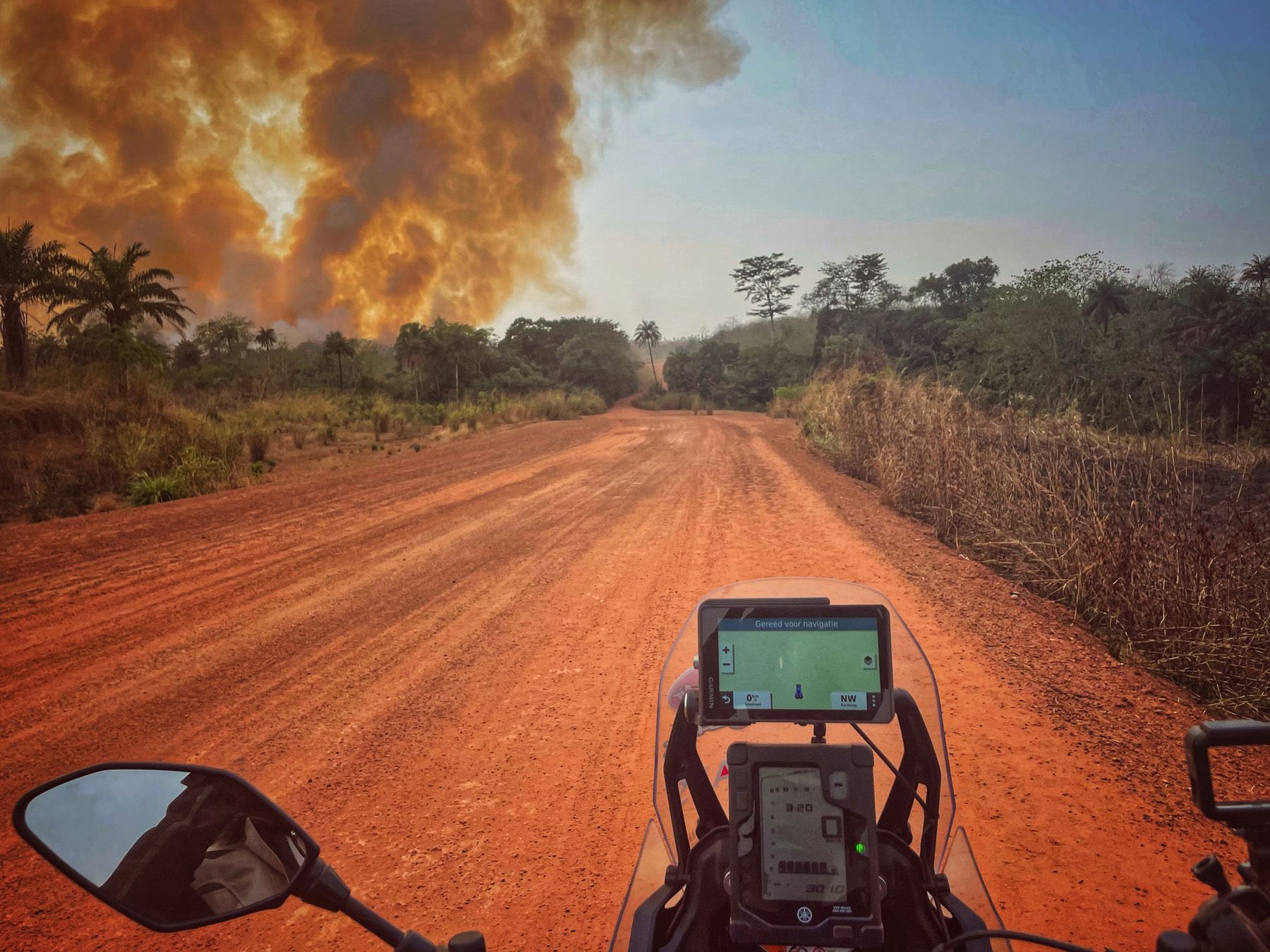
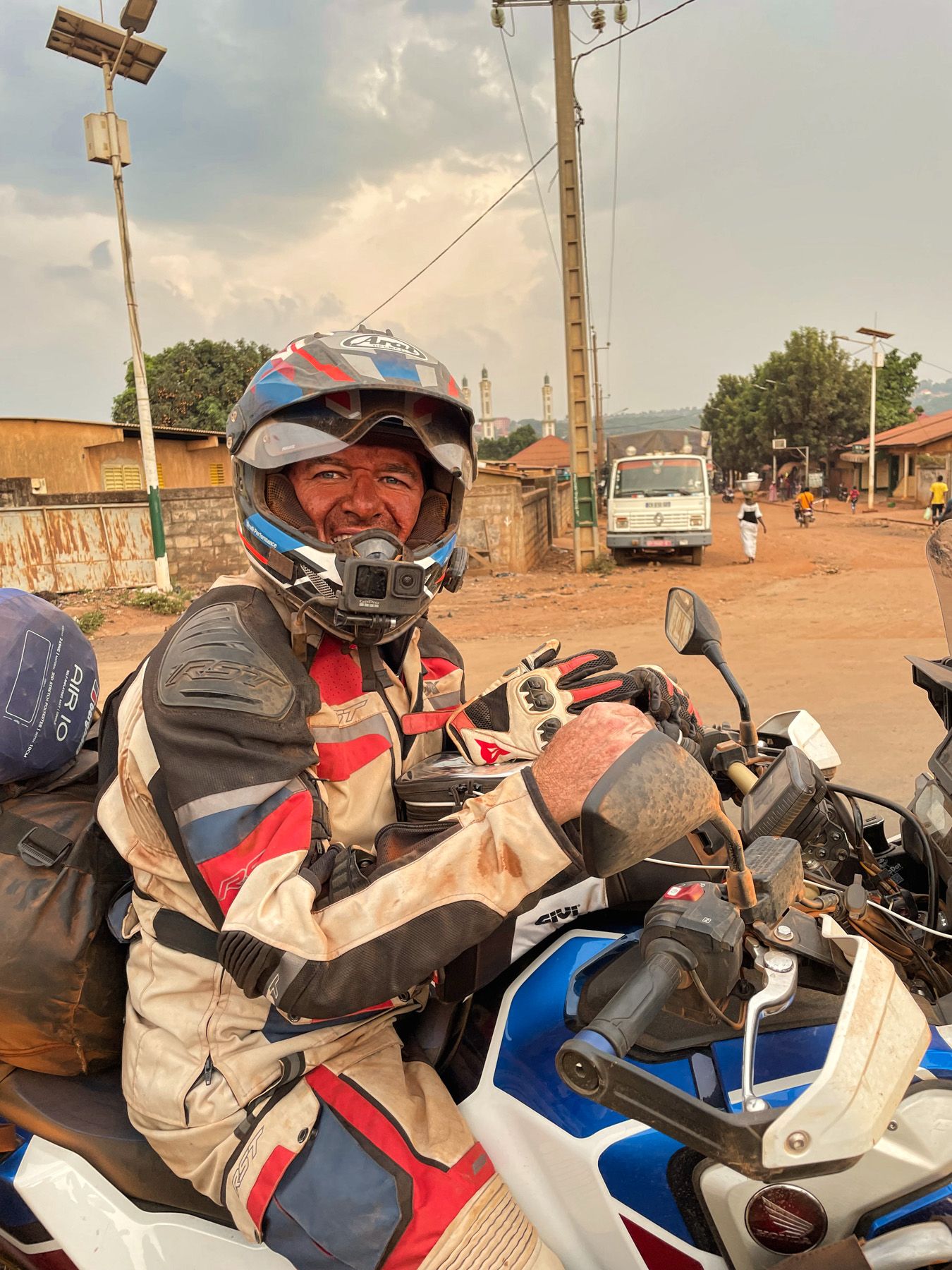
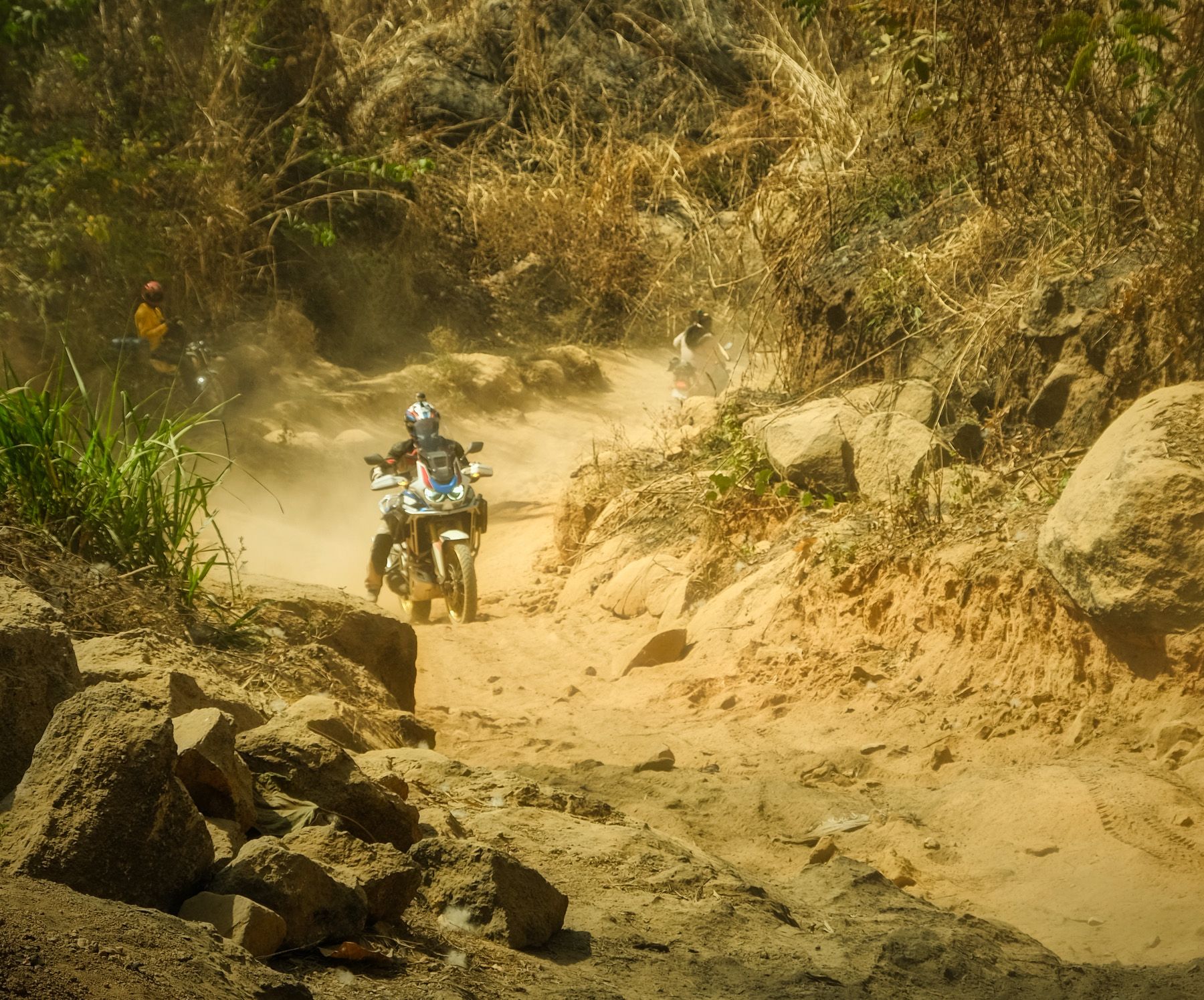
In the afternoon, temperatures can easily reach 40°C in the open plains. Combined with long periods of drought, huge bush fires can be seen from miles away. Often we had to stop to check if we were on the right track, as GPS was not always functioning and maps were not accurate.

We rode through Outamba-Kilimi National Park, located near the border with Guinea. The park is divided into two areas, Outamba and Kilimi, and is named after its highest peak and longest river. Wildlife includes chimpanzees, colobus monkeys, pygmy hippos, elephants and many bird species.

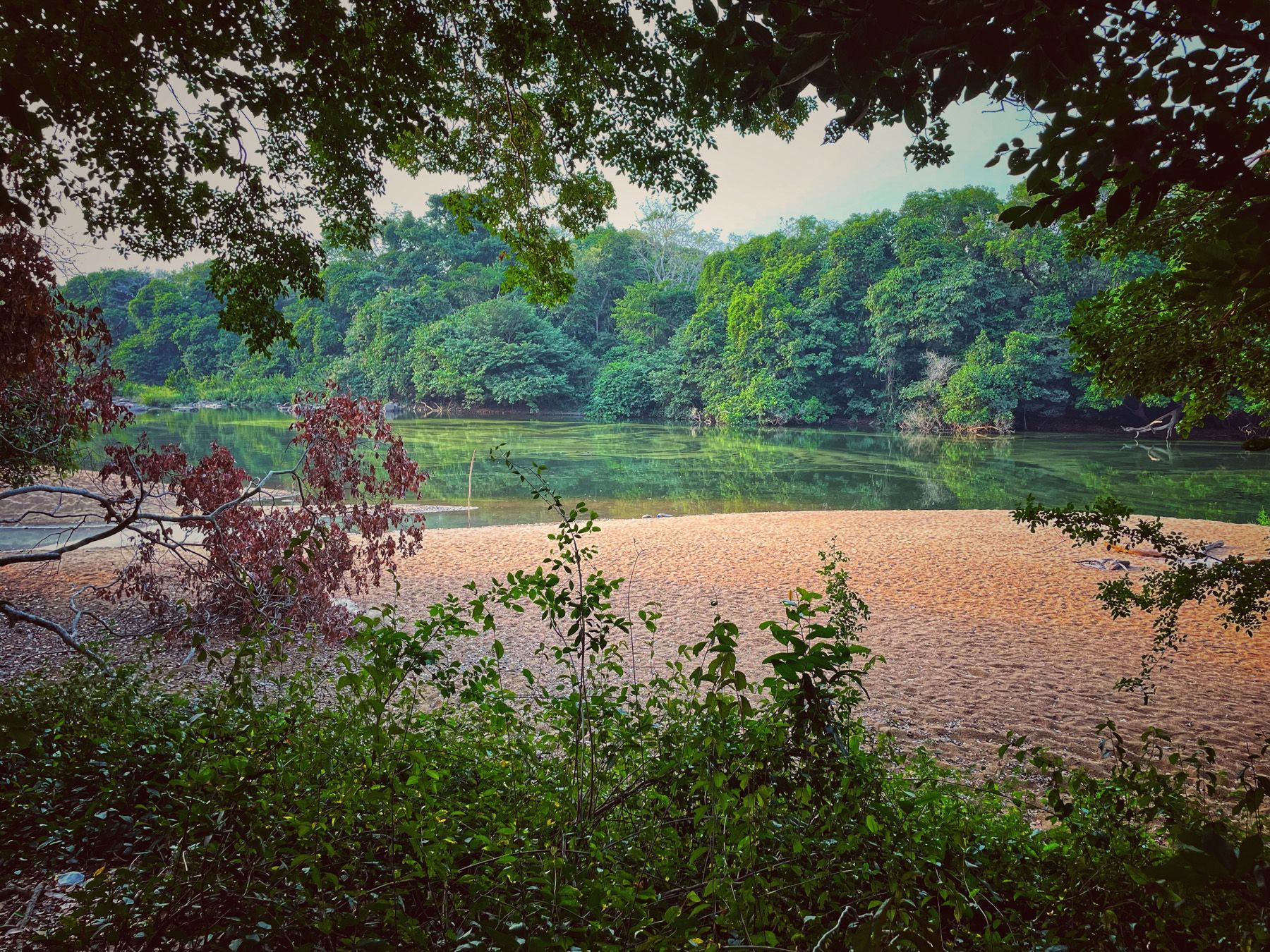
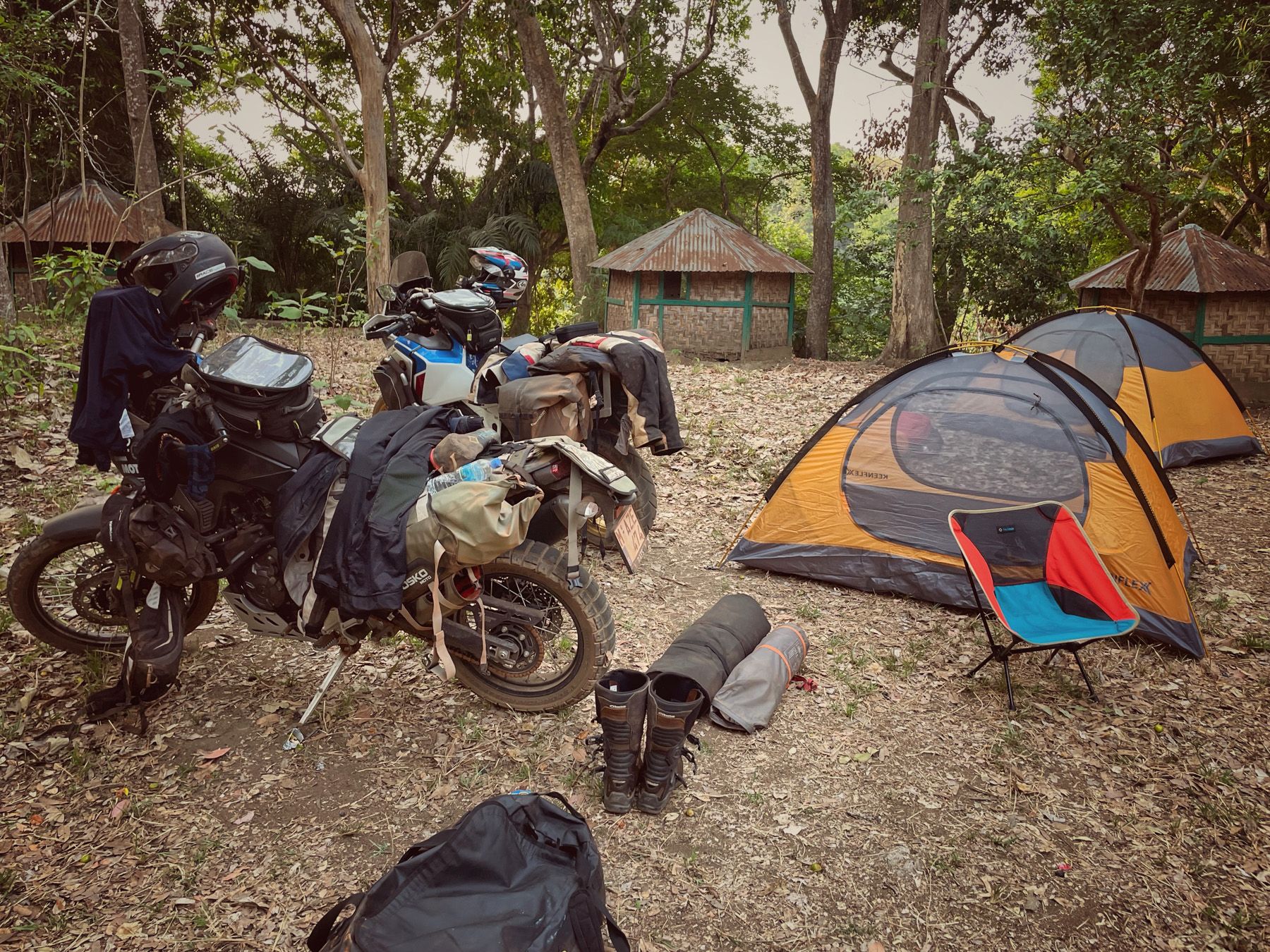
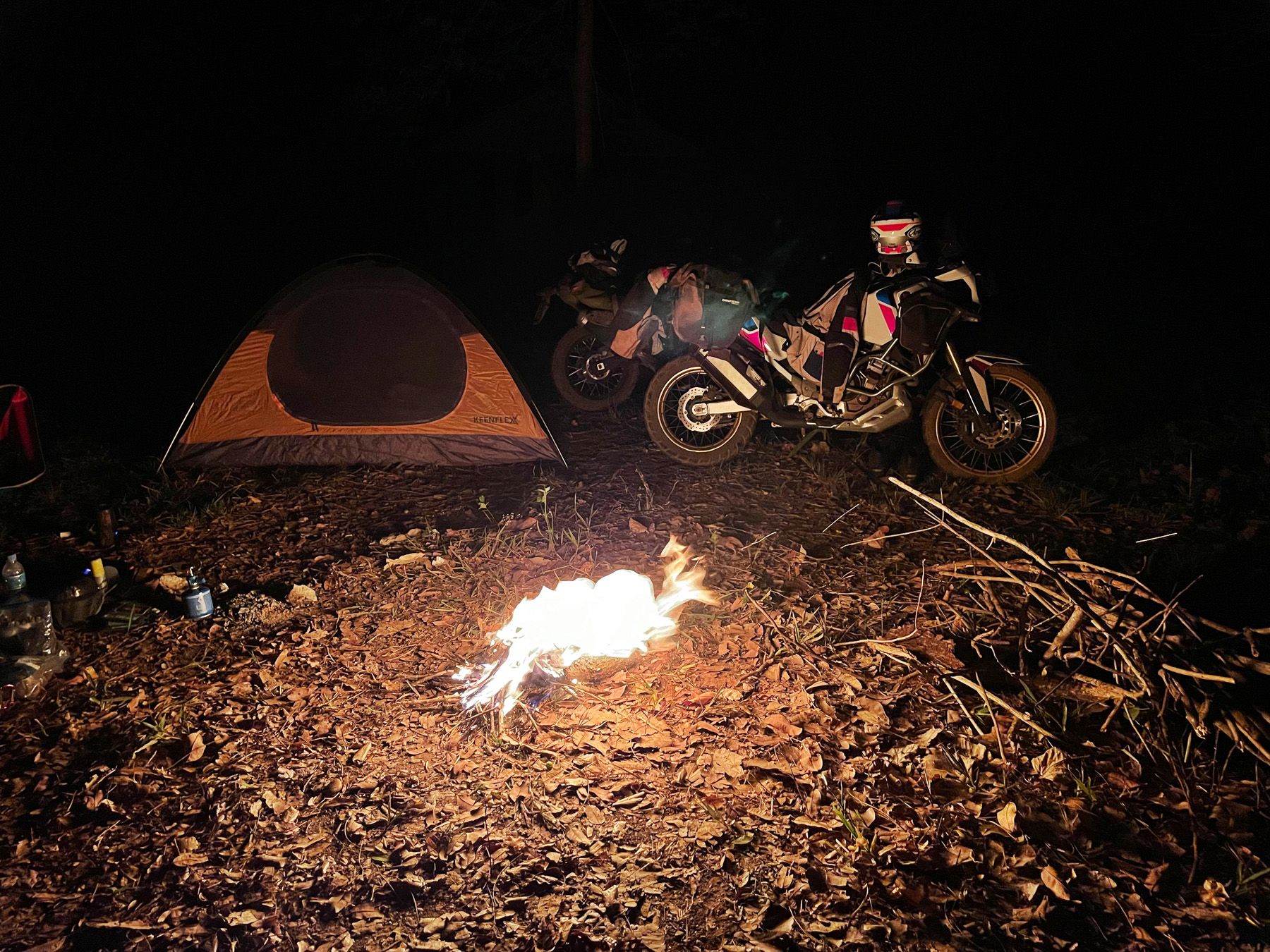
We arrived late afternoon after a full day of off-road riding. We were very tired. For a small fee paid to the park rangers, we were allowed to camp inside the park near the Kilimi River. We jumped in to cool off and wash all the dust off our bodies. No crocodiles or hippos around.

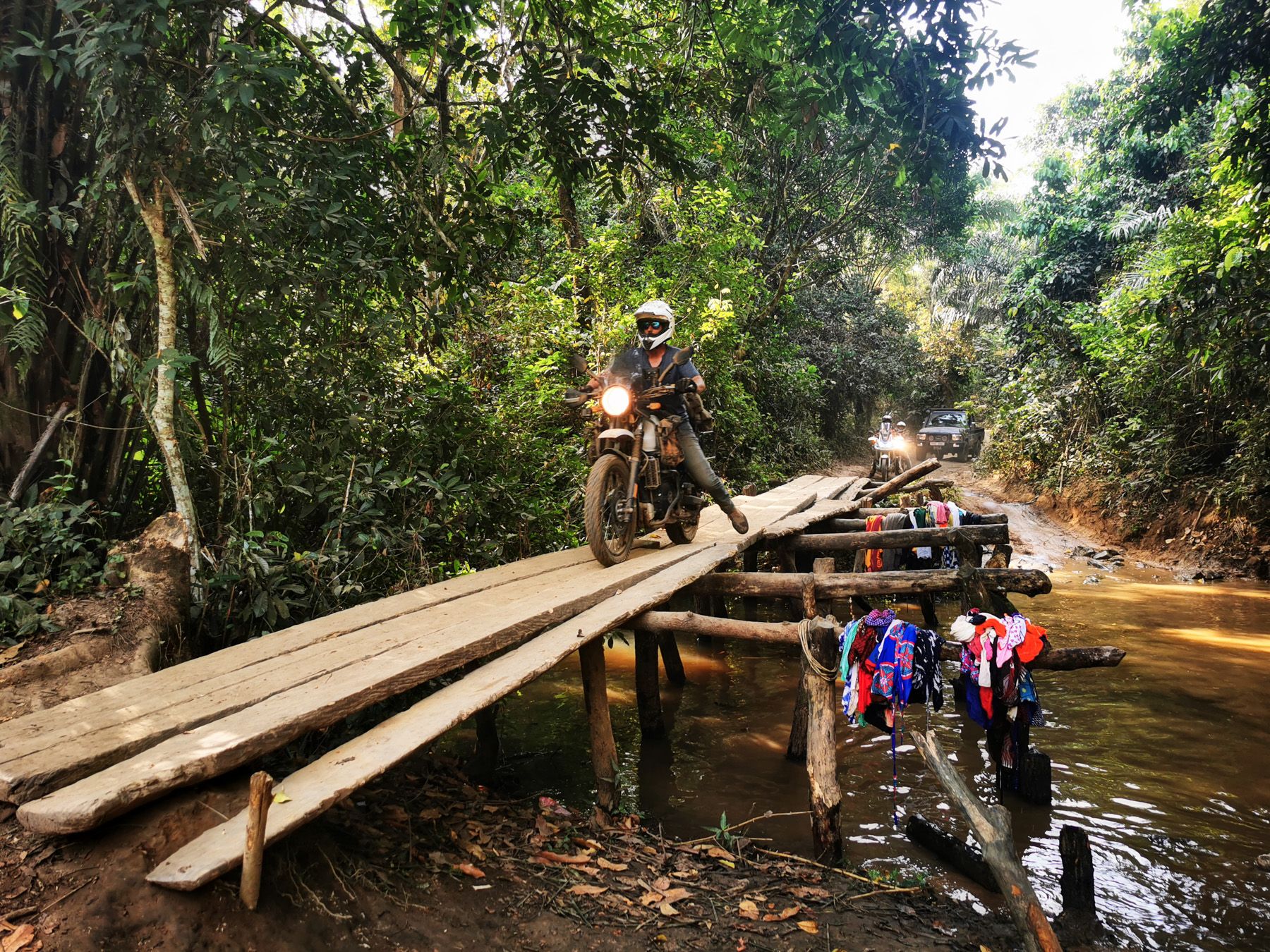
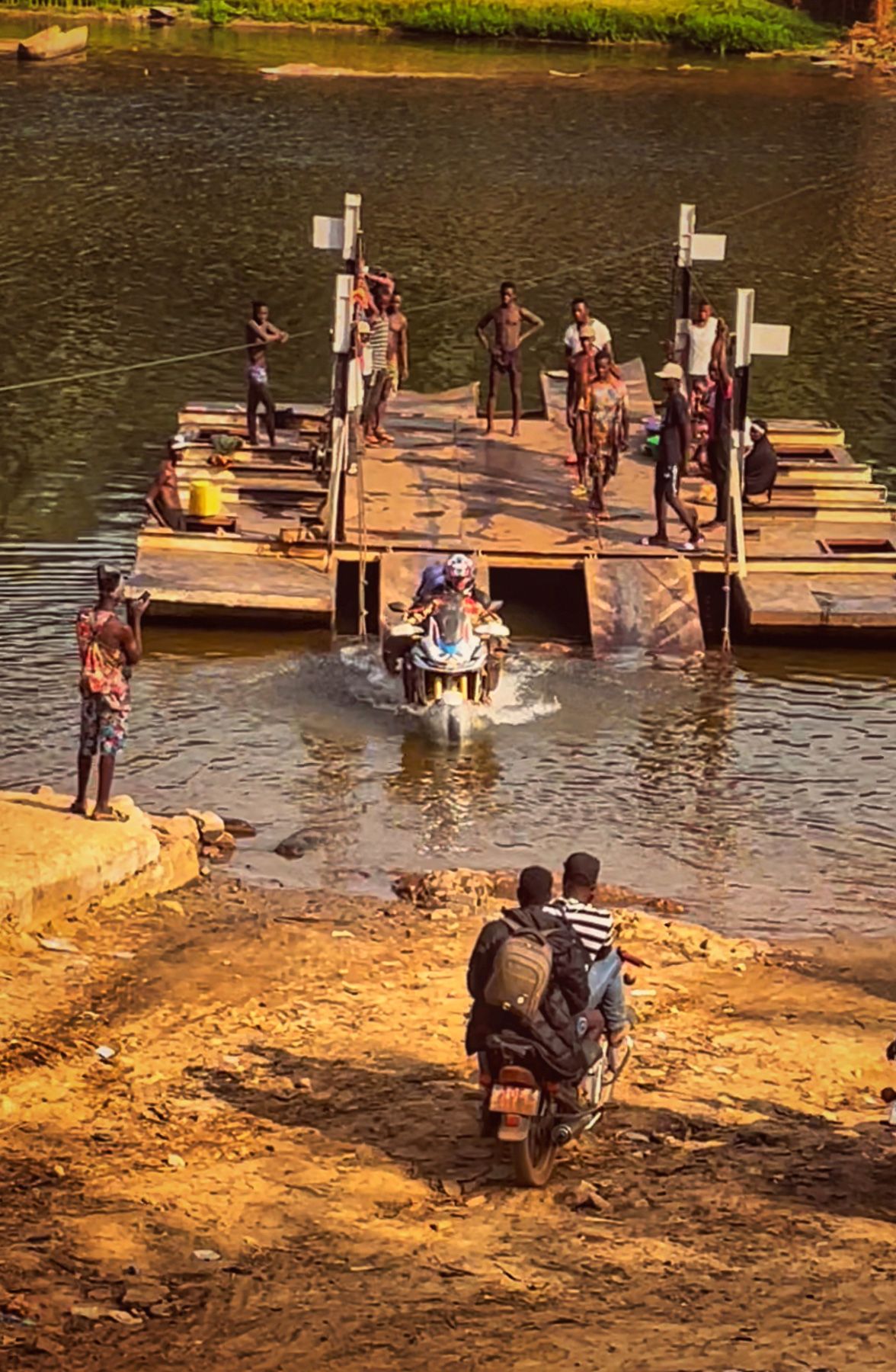
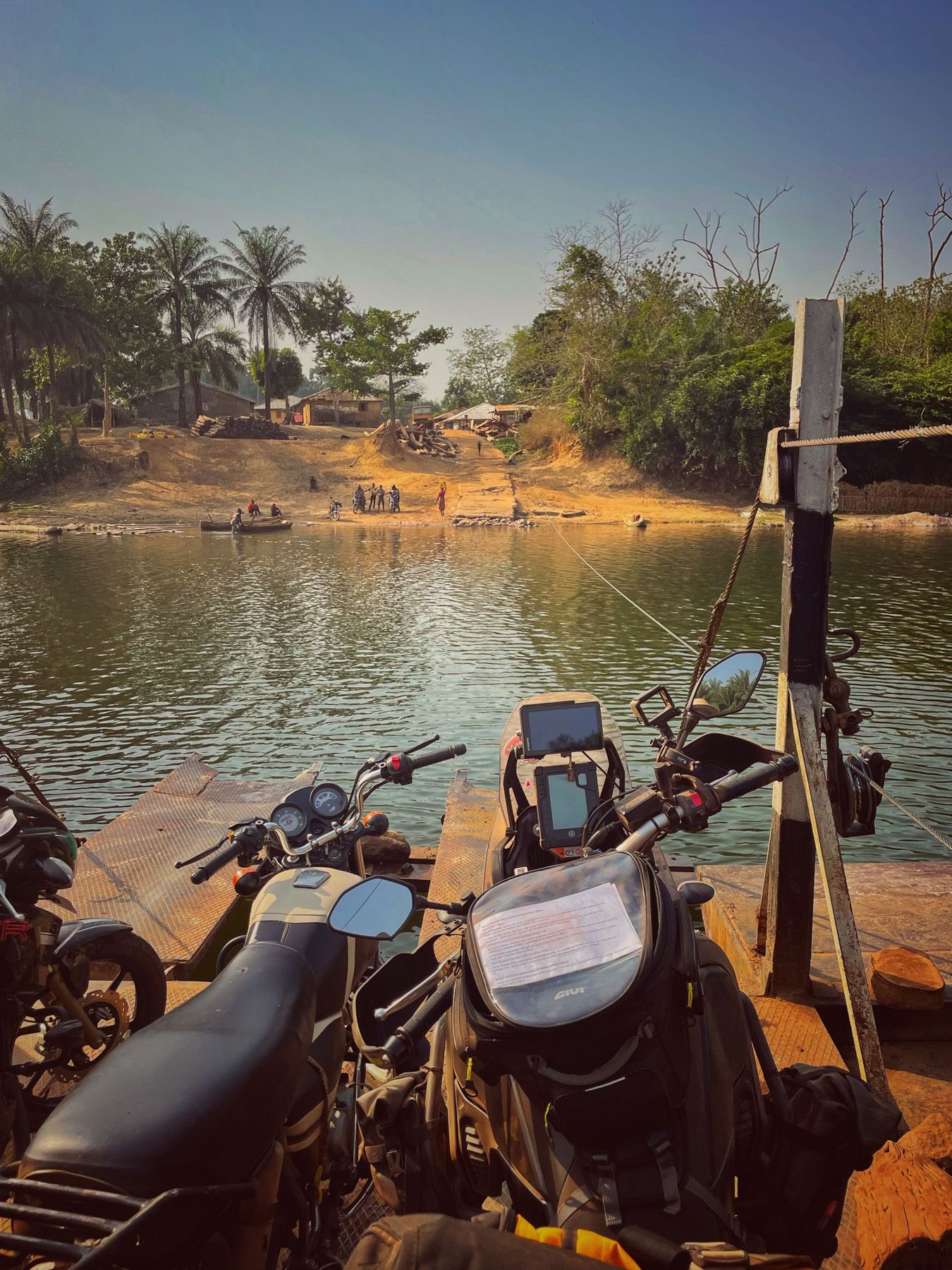
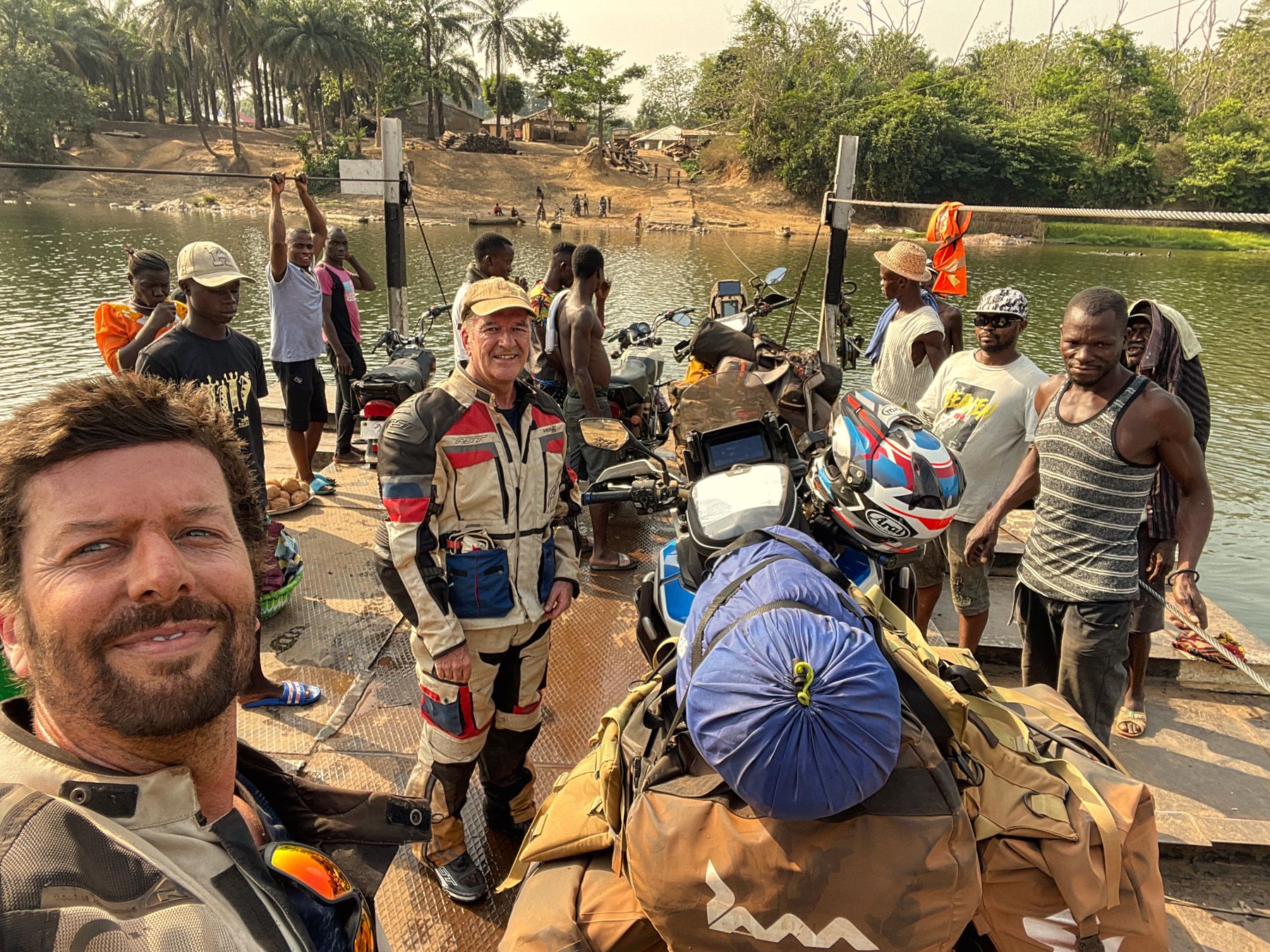
River crossings in Sierra Leone can be unpredictable. Bridges indicated on maps are sometimes no longer there or in such bad condition that crossing is impossible, forcing you to find another crossing point that could be hours away. At one point we were lucky there was a ferry. However, because of the dry season, it could not reach the riverbank. We had to ride the first part through the river over very slippery stones. With a fully loaded 300kg bike, it was a bit of a gamble — but with some luck, we mastered it.

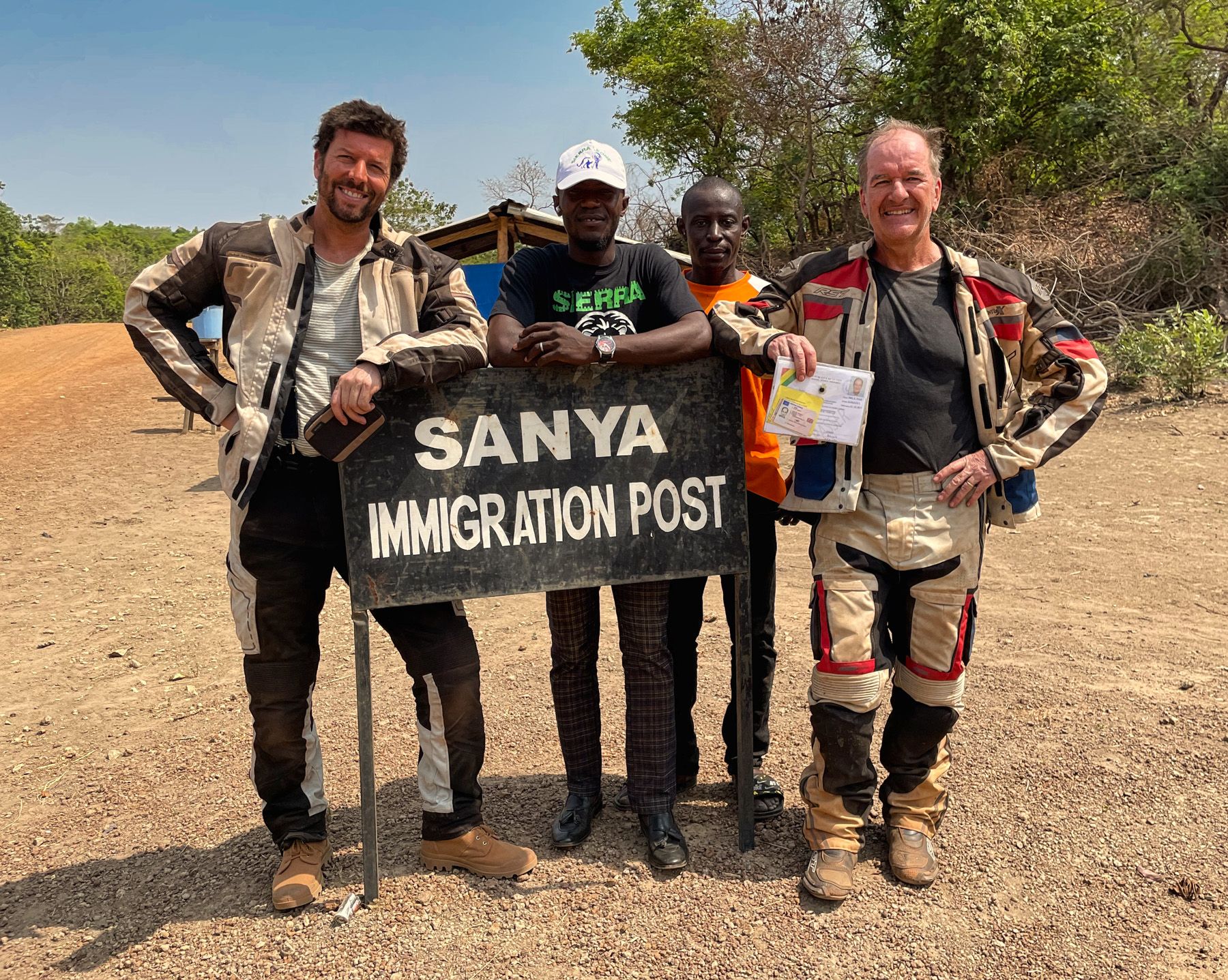
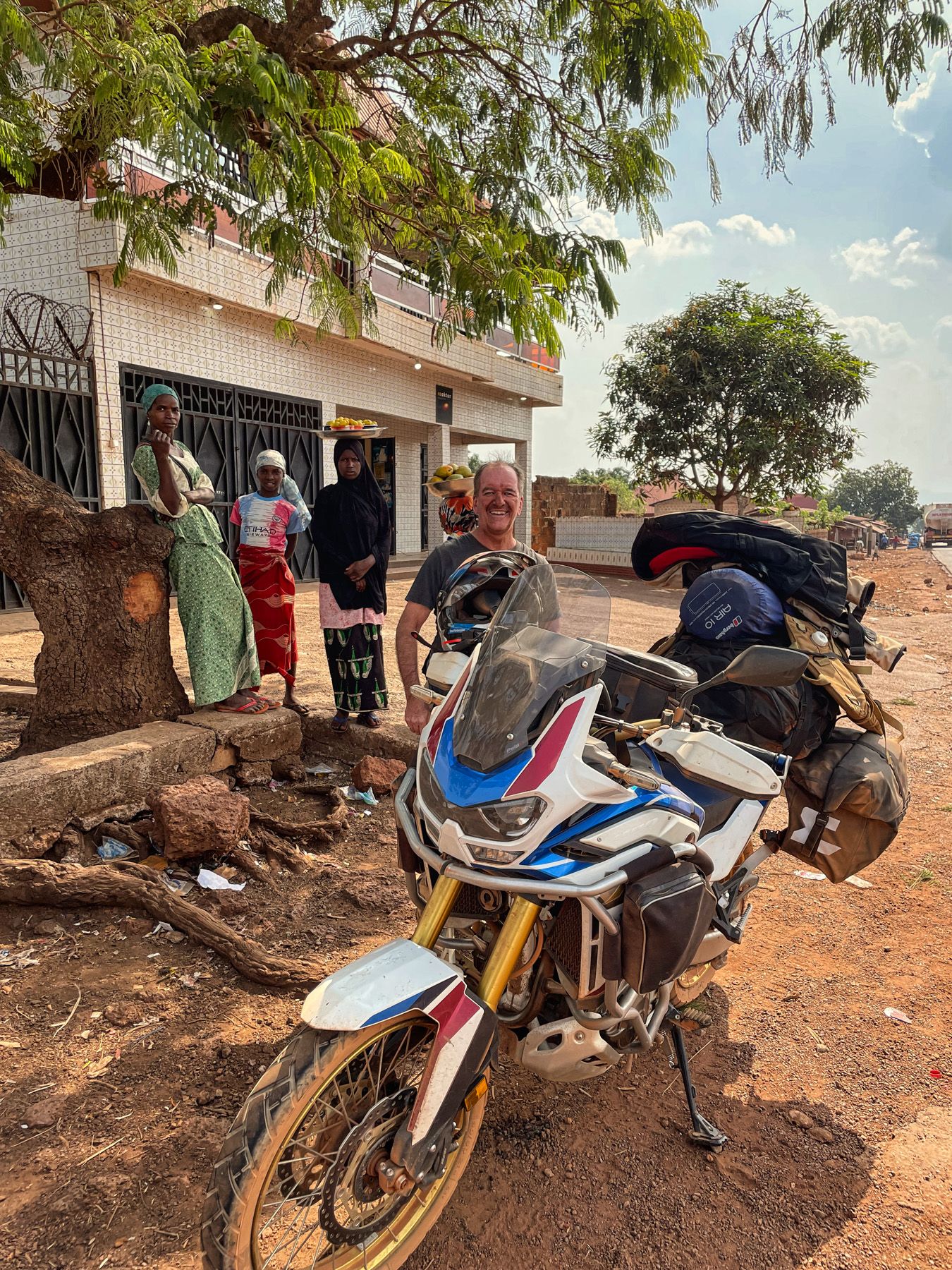
Leaving Sierra Leone at the Sanya border, we crossed a stretch of no-man’s-land before entering Guinea Conakry. As soon as you drop a few words of the local language, border police start to smile and stamp your passport without too much hassle. Five minutes for the procedure and fifteen minutes to pose for their photos.

The Pumwees had left their first country.

Guinea Conakry

I was in Guinea the year before (2021) and remembered the bad roads and being stopped by every policeman I crossed. So we were aware that entering the country could be a long endeavour, possibly requiring some “sponsoring.”

After a night in Outamba Park and riding the full morning off-road in very hot temperatures, we arrived at the border crossing. First we stopped at a post with armed military sitting under a tree in the shade. They looked tough, but as soon as you start small talk — explaining you worked in the country before, talking about Africa — they instantly become more friendly.

After filling in the necessary paperwork and signing a ledger, we were sent into a concrete building where the immigration officer sat behind a wooden table under a fan in an almost empty room. He told us to sit, took our papers, and started discussing in French with his colleague that there was a “very important stamp to enter” missing, knowing that I understood what he was saying.

I felt the whole “we are not allowed to enter” show would start. Surprisingly, he stamped our passports and told us we could enter. That went smoother than expected.

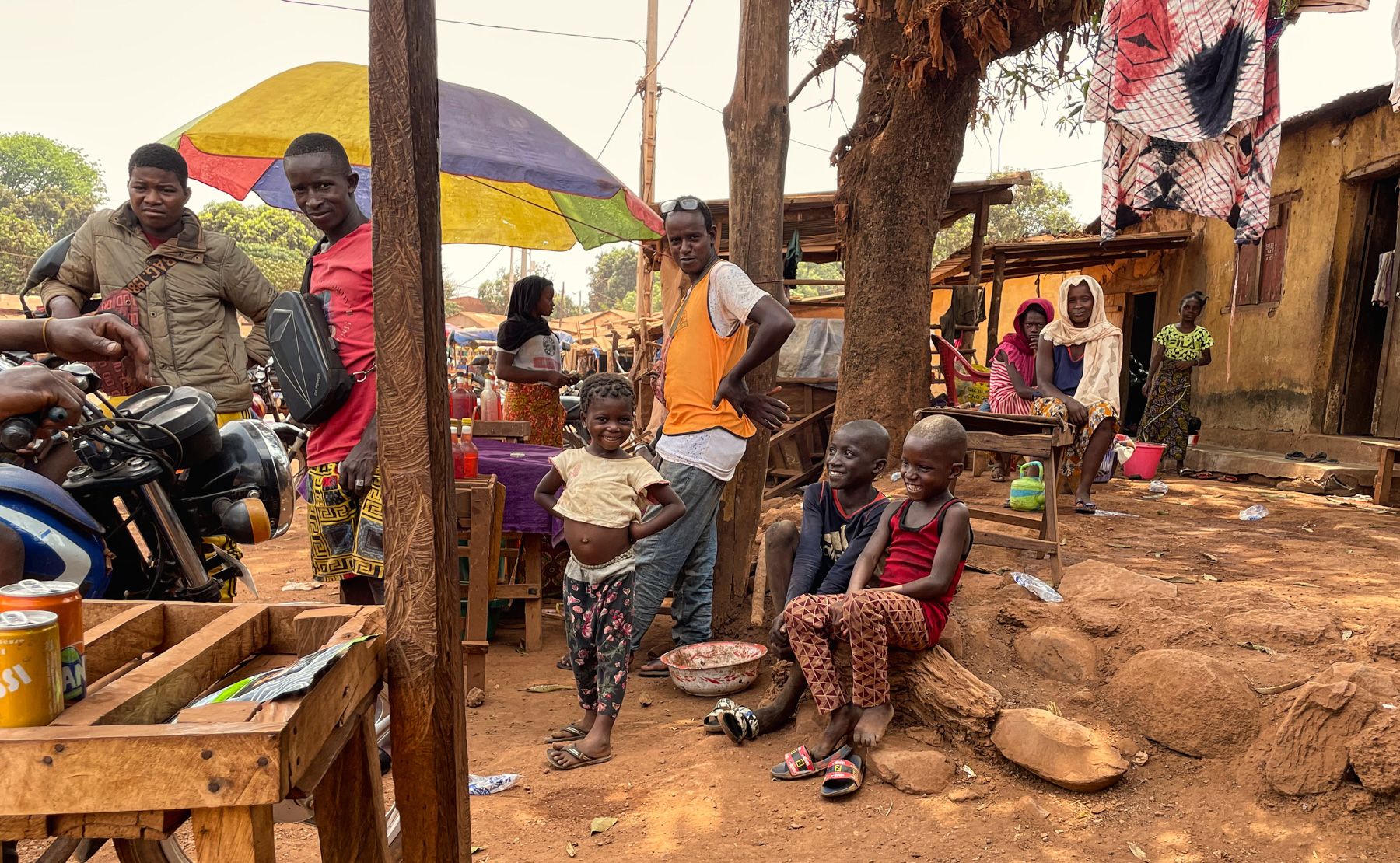
Soon after leaving the border village, we rode on very dusty roads full of wood-logging trucks towards Koundara.

In the afternoon we were almost constantly riding behind lines of trucks where you couldn’t see five meters ahead, through potholes and sand sections.

To be continued...


Text and photos by Sven Vandenbroucke.


#FORYOURRIDINGPLEASUREONLY


Mehr Geschichten

It’s Not the Destination… Or Is It?

It’s Not the Destination… Or Is It?

Pumwee on Wheels part II - Mauritania

Pumwee on Wheels part II - Mauritania

RTWPaul: Riding Chicamocha Canyon

RTWPaul: Riding Chicamocha Canyon